
Satna is one of Madhya Pradesh’s most important mineral and cement-producing regions. In particular, the district has significant limestone resources that support mining, cement production, industrial lime manufacturing, transportation and other mineral-based activities. Moreover, Satna Limestone is widely valued as a raw material for cement. Depending on its chemical composition, suitable grades may also serve the steel, lime, paper, sugar and other industries.
According to the Ministry of Mines, several limestone blocks in Satna contain both cement-grade and blendable-grade resources. For example, one explored block in the district contains more than 78 million tonnes of limestone resources. In addition, other blocks across Satna also hold substantial cement-grade deposits.
However, limestone quality can vary from one mine or quarry to another. Therefore, buyers should check the calcium content, silica, magnesia, moisture, particle size, impurities and intended industrial use before placing an order. As a result, proper testing can help buyers select limestone that matches their production requirements.
This guide explains the characteristics, grades, mining process, uses, quality checks, purchasing considerations and storage requirements of limestone sourced from Satna.
What Is Satna Limestone?
Direct answer: Satna Limestone is a naturally occurring sedimentary rock that mining operators extract from limestone-bearing areas of Satna district in Madhya Pradesh. Primarily, cement manufacturers use it as a major raw material. However, suitable grades may also support lime production, steelmaking, paper manufacturing, sugar processing and other industrial applications.
Limestone mainly contains calcium carbonate. Nevertheless, its exact chemical composition varies according to the geological deposit. In addition, natural limestone may contain silica, alumina, magnesium, iron and other minerals. Therefore, buyers should rely on laboratory testing instead of judging quality only by appearance.
Satna has long held a strong position as a major mineral-producing area. Moreover, an official MSME district profile identifies limestone as the district’s primary mineral resource and records substantial deposits across the wider Satna mineral belt. As a result, the region supports mining, cement production, processing, transportation and related industrial activities.
Depending on the buyer’s requirements, suppliers may offer Satna Limestone in forms such as:
- Run-of-mine limestone
- Crushed limestone
- Sized limestone
- Cement-grade limestone
- Blendable-grade limestone
- Limestone lumps
- Limestone powder
- Low-grade limestone
- Industrial limestone
- Limestone for lime kilns
The correct form and grade depend on the buyer’s production process.
Why Is Satna Important for Limestone?
answer: Satna is important for limestone because it has large mineral deposits, established mining activity and a strong cement-industry ecosystem. As a result, the region’s limestone resources support cement plants, mining operations, transport businesses, crushing units, laboratories and several other industrial services.
Moreover, the Government of India’s MSME profile describes Satna as one of Madhya Pradesh’s major mineral-producing districts. Historically, limestone has formed the foundation of the area’s cement and mineral-based industries. Therefore, the district continues to play an important role in mining, processing, transportation and industrial production.
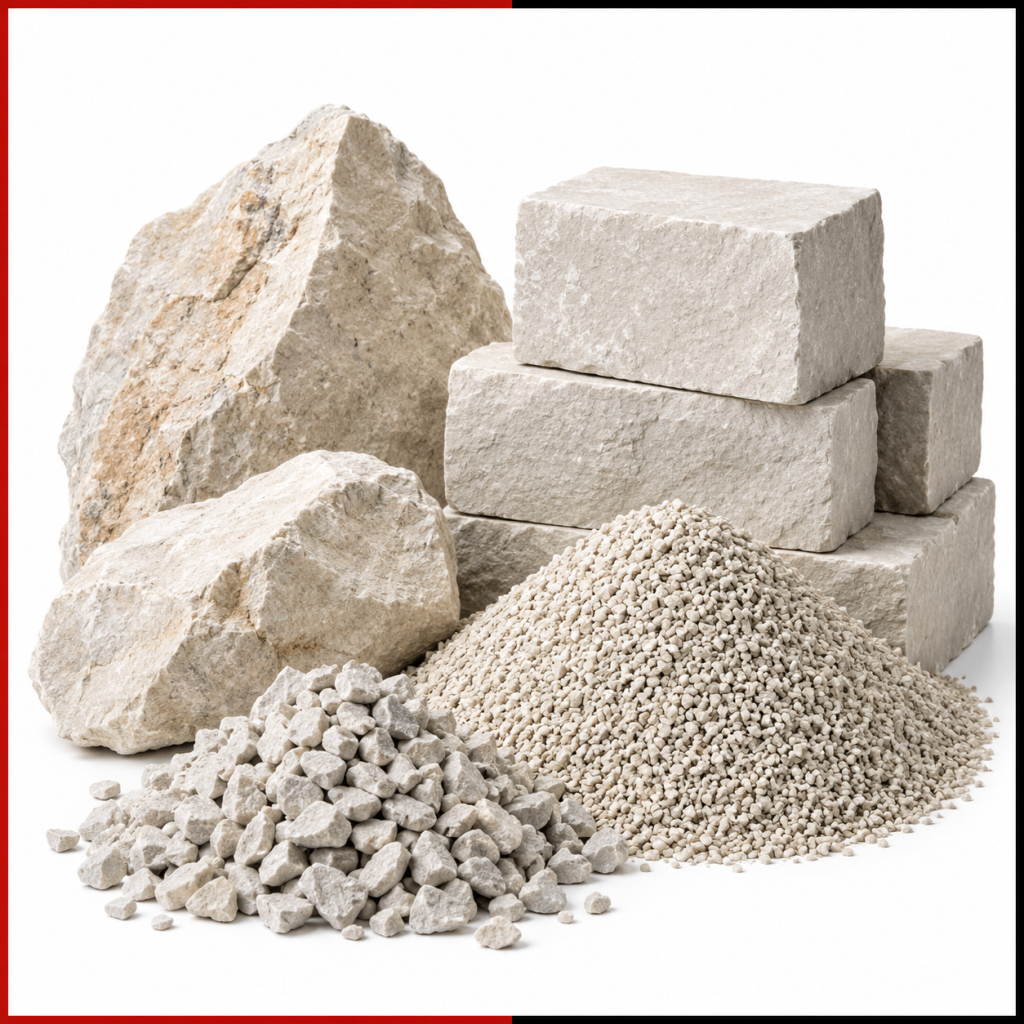
Large Limestone Resources
Government mineral documents identify several explored limestone blocks in Satna. The Jamodi-Mahanna Sector-I block was reported to contain approximately 78.74 million tonnes of limestone, including cement-grade and blendable-grade material.
Other documented Satna blocks contain additional substantial resources, including deposits in the Nagod and Raghurajnagar areas.
Strong Cement-Industry Connection
Satna has historically been recognised as Madhya Pradesh’s main cement-producing region. The availability of limestone has supported the establishment of cement plants and associated industrial activity.
Employment and Business Opportunities
The limestone supply chain creates work in:
- Mining
- Drilling and blasting
- Crushing and screening
- Machinery operation
- Laboratory testing
- Transport and logistics
- Equipment maintenance
- Cement manufacturing
- Industrial lime production
- Environmental management
Transport and Market Access
Several explored blocks are connected to Satna Junction and regional road networks. This helps move limestone and processed materials to cement plants and industrial buyers.
Main Types and Grades of Satna Limestone
Limestone should be classified according to its chemical properties and intended industrial use. A product described simply as “high-quality limestone” may not suit every industry.
Cement-Grade Limestone
Cement-grade limestone is used as a major raw material in clinker and cement manufacturing.
Its suitability depends on factors such as:
- Calcium oxide content
- Silica
- Alumina
- Iron oxide
- Magnesium oxide
- Alkali content
- Moisture
- Physical consistency
Some Satna blocks officially documented by the Ministry of Mines contain both cement-grade and blendable-grade limestone resources.
Blendable-Grade Limestone
Blendable-grade limestone may not independently meet the full chemical requirements of a cement plant. However, it can be mixed with higher-grade material to achieve the required raw-mix composition.
Blending helps processors use mineral resources more efficiently.
Limestone for Lime Manufacturing
Suitable limestone may be heated in a kiln to manufacture quicklime. Quicklime can then be processed into hydrated lime.
Lime quality depends heavily on:
- Calcium content
- Reactivity
- Silica and magnesium levels
- Kiln temperature
- Stone size
- Burning process
Steel-Grade Limestone
The steel industry uses suitable limestone as a flux to help remove impurities during processing.
Steel buyers usually require specific chemical and physical parameters. A general cement-grade product should not automatically be treated as steel-grade limestone.
Limestone Powder
Crushed limestone may be ground into powder for industrial or construction-related applications.
Powder specifications may cover:
- Mesh size
- Brightness
- Calcium carbonate percentage
- Moisture
- Bulk density
- Particle-size distribution
Key Features of Quality Satna Limestone
Suitable Calcium Content
The required calcium level depends on the final application. Cement, lime and steel plants may each set different acceptance limits.
A laboratory report is more reliable than visual appearance.
Controlled Silica
Silica is naturally present in many limestone deposits. Its acceptable level depends on the manufacturing process and the composition of other raw materials.
Low Undesirable Impurities
Depending on the application, buyers may need to control:
- Magnesium
- Alkalis
- Sulphur
- Phosphorus
- Clay
- Organic matter
- Surface contamination
Consistent Size
Uniform limestone size improves handling and processing.
A lime kiln may require carefully sized lumps, while a cement crusher may accept larger run-of-mine material.
Low Excess Moisture
Excessive moisture increases transport weight and may affect crushing, screening and storage.
Minimal Clay and Overburden
Clay, soil and weathered material can reduce usable quality. Commercial buyers should define acceptable contamination limits before dispatch.
How Is Satna Limestone Mined and Processed?
answer: Satna Limestone is generally produced through open-cast mining. The process includes geological investigation, removal of overburden, drilling, controlled blasting, excavation, crushing, screening, quality testing and transportation. Mining must follow approved plans, environmental conditions and applicable mineral regulations.
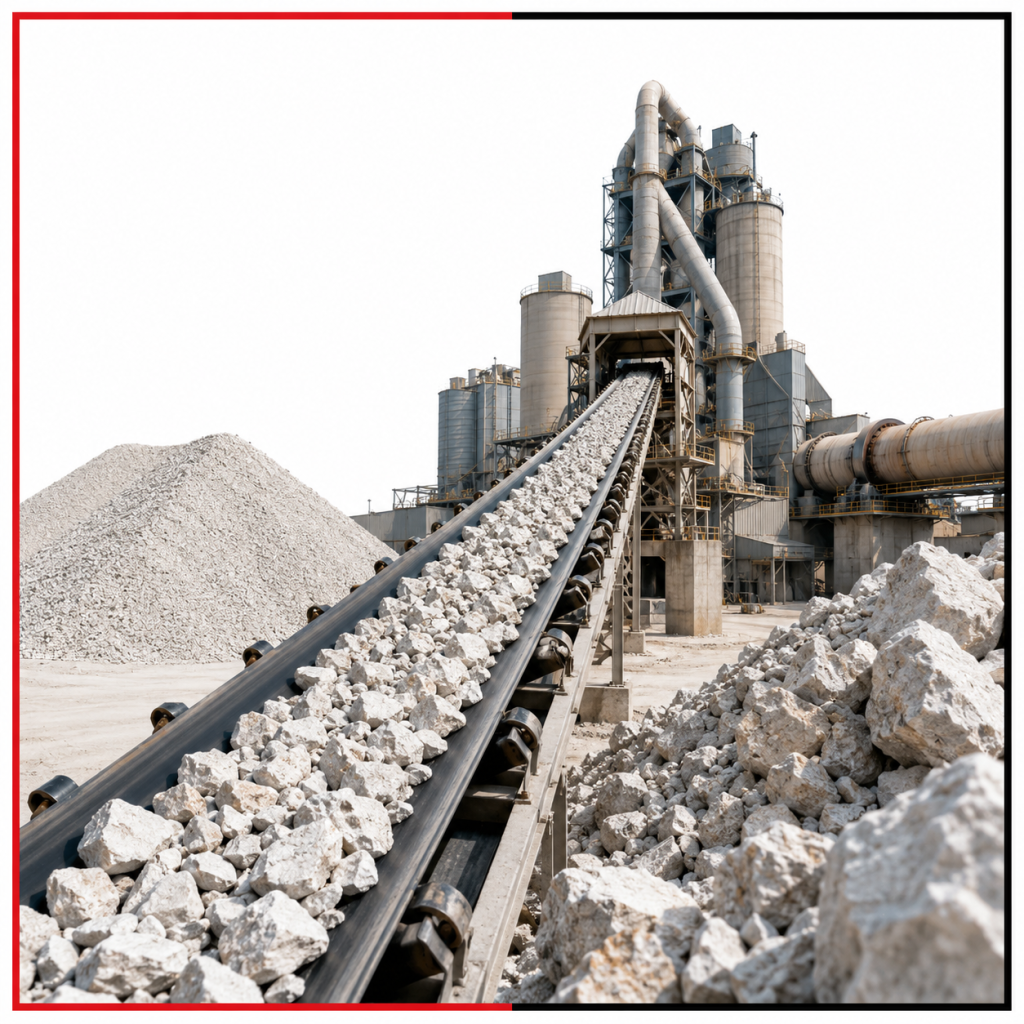
Step 1: Geological Exploration
Before mining begins, geological teams study the deposit using:
- Surface mapping
- Sampling
- Boreholes
- Core analysis
- Chemical testing
- Resource estimation
The Ministry of Mines has documented G2 and G3 exploration work for multiple limestone blocks in Satna.
Step 2: Mine Planning
The operator prepares a mining plan that covers:
- Mineral reserves
- Production schedule
- Bench design
- Waste management
- Equipment use
- Environmental protection
- Mine closure
The plan must receive approval from the relevant regulatory authority.
Step 3: Removing Overburden
Soil, weathered rock and unwanted surface material are removed to expose the limestone.
Topsoil may be stored separately for plantation and rehabilitation work.
Step 4: Drilling and Blasting
Where the rock is hard, holes are drilled and controlled blasting is carried out.
Blasting should be designed to:
- Fragment the rock efficiently
- Limit fly rock
- Reduce excessive vibration
- Maintain safe mine benches
- Minimise unnecessary fines
Step 5: Excavation and Loading
Excavators and loaders collect the fragmented limestone and load it into dumpers or trucks.
Step 6: Crushing and Screening
Large pieces may be sent through crushers. Screening separates the material according to the required size.
Step 7: Quality Testing
Samples are tested to determine the chemical composition and grade.
Material from different mine sections may be blended to maintain more consistent quality.
Step 8: Transportation
The limestone is transported to cement plants, lime kilns, processing units or buyer facilities.
Main Uses of Satna Limestone
The Indian Bureau of Mines reports that limestone from Madhya Pradesh is used in cement, sugar, paper, steel and lime industries.
Cement Manufacturing
Cement is the largest and most important application of limestone in the Satna region.
Limestone is crushed and combined with corrective materials before being heated in a kiln to form clinker. The clinker is later ground with gypsum and other permitted materials to produce cement.
Quicklime and Hydrated Lime
Suitable limestone is heated at high temperatures to manufacture quicklime.
Quicklime can be processed further into hydrated lime for construction and industrial applications.
Steel Industry
Limestone may be used as a flux in steelmaking. It helps combine with unwanted impurities so they can be removed as slag.
Sugar Industry
Lime derived from limestone may be used during sugar-processing and purification operations.
Paper Industry
Suitable calcium-based materials may be used in paper-manufacturing processes and coating applications.
Construction Work
Crushed or processed limestone may be used in:
- Road construction
- Filling material
- Building products
- Cement-based construction
- Selected aggregate applications
Suitability must be confirmed through physical and chemical testing.
Chemical and Industrial Applications
Selected grades may serve chemical-processing, environmental-treatment and mineral-filler applications.
Benefits of Choosing Satna Limestone
Established Mineral Region
Satna has a documented limestone resource base and a long connection with mining and cement production.
Access to Cement-Grade Material
Government exploration documents record cement-grade and blendable-grade limestone in multiple Satna blocks.
Bulk Supply Potential
Mining and processing operations in the regional cluster can support large industrial requirements, subject to lease, production and transport capacity.
Scope for Quality Blending
Different limestone grades may be blended to meet the chemical requirements of cement plants and other processors.
Industrial Infrastructure
The mining and cement ecosystem supports laboratories, transporters, machinery providers and maintenance services.
Multiple Industrial Uses
Depending on its grade, limestone can serve cement, lime, steel, sugar, paper and other sectors.
Common Buying Mistakes
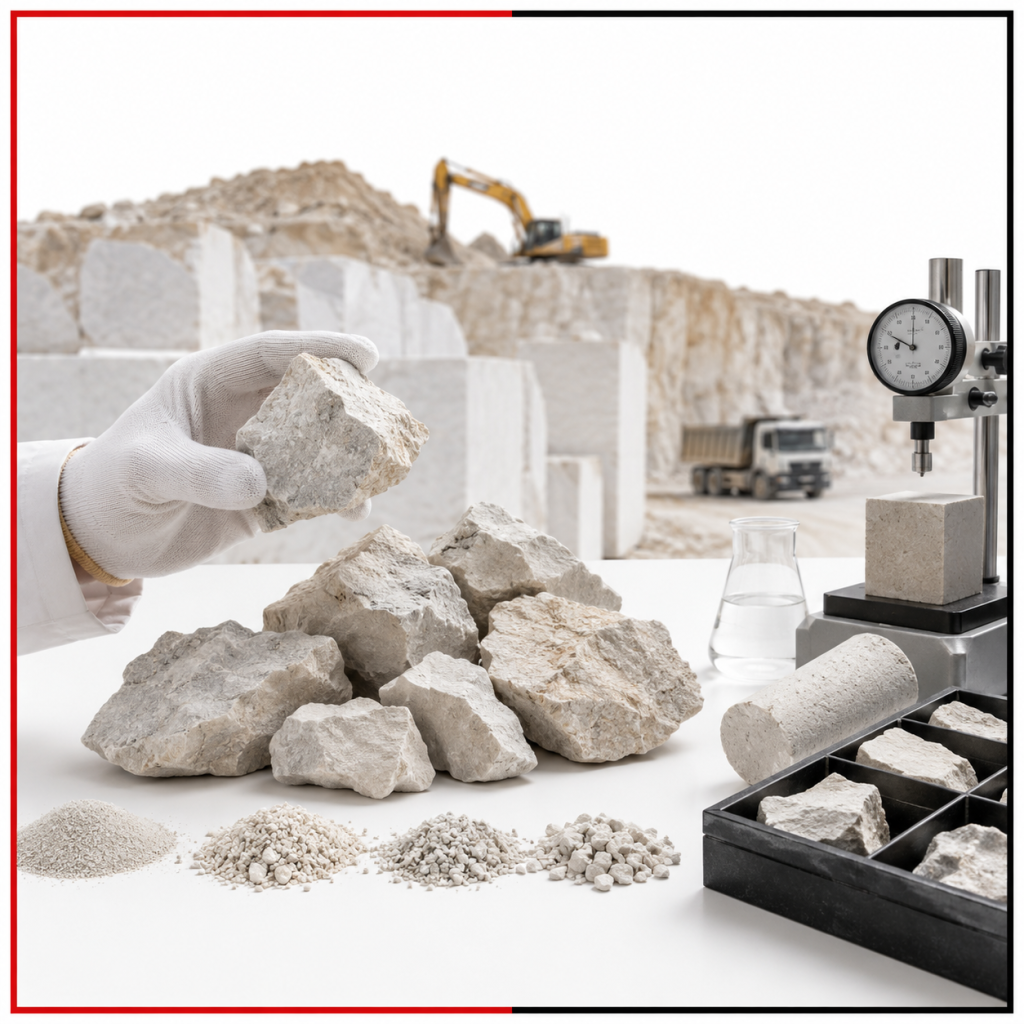
Choosing Limestone Only by Price
Problem: The lowest-priced material may contain excessive impurities or moisture.
Cause: The buyer compares only the rate per tonne.
Solution: Compare delivered usable quality and processing performance.
Buying Without a Chemical Report
Problem: The limestone may not meet the plant’s raw-material requirements.
Cause: Visual appearance is treated as proof of quality.
Solution: Request a recent representative laboratory report.
Ignoring Variation Within a Mine
Problem: Quality changes between deliveries.
Cause: Natural deposits are assumed to be completely uniform.
Solution: Define sampling frequency and acceptable variation limits.
Not Specifying Particle Size
Problem: Material creates crushing, kiln or handling problems.
Cause: The purchase order does not mention lump or powder size.
Solution: State the required size range and tolerance.
Ignoring Moisture
Problem: The buyer pays transport cost for excess water weight.
Cause: Wet material is not tested before dispatch.
Solution: Include a moisture limit and adjustment method in the contract.
Inspecting Only One Truck
Problem: One sample does not represent the complete shipment.
Cause: Sampling is not carried out systematically.
Solution: Collect samples from multiple loads and locations.
How to Buy Satna Limestone Safely
Direct answer: Buy Satna Limestone by defining the industrial use, chemical grade, particle size, moisture limit and monthly quantity. Request representative samples and laboratory reports before confirming a bulk order. Buyers should also verify the mine source, legal dispatch documents, transport terms and quality-rejection process.
Follow these steps:
- Define whether the limestone is for cement, lime, steel or another use.
- Specify the required calcium, silica, magnesium and other parameters.
- Request a representative sample.
- Obtain a recognised laboratory report.
- Confirm lump size or powder mesh.
- Check the mine and mineral-dispatch documentation.
- Define moisture and foreign-matter limits.
- Confirm loading and transport responsibility.
- Conduct a trial delivery.
- Record rejection and price-adjustment terms in writing.
How to Evaluate Satna Limestone Quality
A proper evaluation should combine laboratory testing with physical inspection.
Important checks include:
- Calcium oxide or calcium carbonate
- Silica
- Alumina
- Iron oxide
- Magnesium oxide
- Moisture
- Loss on ignition
- Particle size
- Clay contamination
- Visible weathering
- Bulk density
- Reactivity, where required
The exact testing programme should match the buyer’s industrial process.
Satna Limestone vs Unverified Generic Limestone
| Factor | Verified Satna Limestone | Unverified Generic Limestone |
| Regional source | Mine or Satna source can be confirmed | Origin may be unclear |
| Chemical report | Can be requested by lot | May not be available |
| Grade | Cement, blendable or industrial grade | May be broadly described |
| Traceability | Dispatch and mine records may be available | Often limited |
| Size specification | Can be agreed before supply | May contain mixed sizes |
| Bulk supply | Supported by an established mineral region | Depends on seller |
| Best suited for | Industrial buyers needing documented material | General low-specification use |
A regional name should be used only when the material is genuinely sourced from the stated area.
Cement-Grade Limestone vs Lime-Grade Limestone
| Feature | Cement-Grade Limestone | Lime-Grade Limestone |
| Main use | Clinker and cement production | Quicklime and hydrated lime |
| Key concern | Balanced raw-mix chemistry | Calcium content and reactivity |
| Size requirement | Depends on crusher and plant | Often controlled kiln-feed size |
| Blending | Commonly used | Depends on product requirement |
| Main buyers | Cement plants | Lime-kiln operators |
| Testing | CaO, silica, alumina, iron and MgO | Calcium, MgO, silica and reactivity |
A limestone lot suitable for cement may not automatically provide the desired lime-burning performance.
Best Limestone Manufacturer and Supplier in Satna
Satna has limestone mines, quarry operators, crushing units, cement-linked suppliers and mineral traders, but no official authority ranks one company as the best limestone manufacturer or supplier. Buyers should compare mine source, chemical consistency, laboratory reports, legal dispatch documentation, crushing capacity, particle-size control, monthly supply capability, pricing and delivery performance before selecting a supplier.
Best Practices for Industrial Buyers
- Approve specifications before requesting quotations.
- Use independent laboratory testing when necessary.
- Take representative samples from multiple loads.
- Record the mine source and dispatch details.
- Define acceptable chemical variation.
- Set clear moisture and size limits.
- Conduct a plant trial before a long-term contract.
- Compare delivered cost rather than ex-mine price alone.
- Maintain batch-wise quality records.
- Review supplier performance regularly.
Storage and Handling of Limestone
Direct answer: Limestone should be stored on a clean, stable and well-drained surface. Different grades and sizes should be kept separately to prevent mixing. Powdered limestone requires stronger moisture and dust controls than large lumps. Industrial stockpiles should follow site-safety and environmental-management procedures.
Storage Tips
- Separate high-grade and low-grade material.
- Keep clay and soil away from the stockpile.
- Provide suitable drainage.
- Avoid storing directly in muddy areas.
- Mark each lot clearly.
- Control dust during unloading.
- Prevent contamination from coal, ash or other minerals.
- Inspect stockpiles after heavy rainfall.
- Use older material before newer stock where practical.
- Follow safe stockpile-height and machinery procedures.
Frequently Asked Questions
Satna is famous for limestone because the district has large documented mineral deposits and a long-established cement-industry cluster. Government records identify Satna as a major mineral-producing district with cement-grade and blendable-grade limestone resources.
Satna Limestone is mainly used for cement manufacturing. Suitable grades may also be used for quicklime, hydrated lime, steelmaking, sugar processing, paper and selected construction or chemical applications.
Visual inspection alone is not enough. Good-quality limestone should meet the chemical and physical requirements of its intended use. Buyers should test calcium, silica, magnesium, moisture, impurities and particle size.
Yes. Mines, processors and mineral suppliers may offer limestone in bulk quantities. Buyers should verify supply capacity, source, legal documents, grade, size, laboratory results and transportation terms before ordering.
Cement-grade limestone is material whose chemical composition is suitable for use in cement raw mix. It must work with other plant raw materials to achieve the required clinker chemistry.
Key Takeaways
- Satna is a major limestone and cement-producing region.
- Government documents record significant cement-grade and blendable-grade resources.
- Limestone quality varies naturally between deposits and mine sections.
- Cement, lime and steel buyers require different specifications.
- Chemical testing is more reliable than appearance.
- Particle size and moisture should be included in purchase terms.
- Bulk buyers should conduct representative sampling.
- Mine and dispatch documentation should be verified Therefore.
- No supplier should be called the best without comparing quality and delivery performance.
Final Verdict
Final Verdict
Satna Limestone is an important industrial mineral that supports Madhya Pradesh’s cement and mineral-processing economy. In particular, the region’s established resource base and industrial infrastructure make it highly relevant for cement plants, lime manufacturers and other bulk buyers.
However, Satna origin alone does not guarantee that every limestone lot will meet a specific plant requirement. Therefore, buyers should evaluate the material’s chemical composition, moisture, impurities, particle size and consistency before approving a shipment.
For greater assurance, buyers should first approve a representative sample and obtain reliable laboratory results. In addition, they should complete a production trial before entering into a long-term supply arrangement. As a result, they can reduce quality risks and select material that suits their industrial process.
Conclusion
Satna Limestone represents one of Madhya Pradesh’s most valuable mineral resources. Moreover, its extensive use in cement manufacturing and potential suitability for the lime, steel, paper and sugar industries give it significant commercial importance.
Therefore, buyers looking for limestone in Satna should clearly define the required grade, chemical composition, particle size and monthly quantity. In addition, they should verify the mine source, laboratory reports, mineral-dispatch documents and supplier performance before placing a bulk order.
Overall, careful sampling, written specifications and regular testing can reduce production problems. As a result, industrial buyers can receive more consistent, suitable and usable limestone for their operations.
| Manufacturers | Contact / Address |
| Shri Krishna Minerals | VISIT NOW |
| Raj Associates | VISIT NOW |
| Maruti Earthmovers | VISIT NOW |
| Shri Sai Balaji Minerals | VISIT NOW |
| Uma Mines Pvt. Ltd | VISIT NOW |
| Shiv Shakti Mining & Logistics | VISIT NOW |
| Prism Johnson Limited (Mining Division) | VISIT NOW |
| UltraTech Cement Ltd. (Limestone Mines) | VISIT NOW |
Leave a Reply