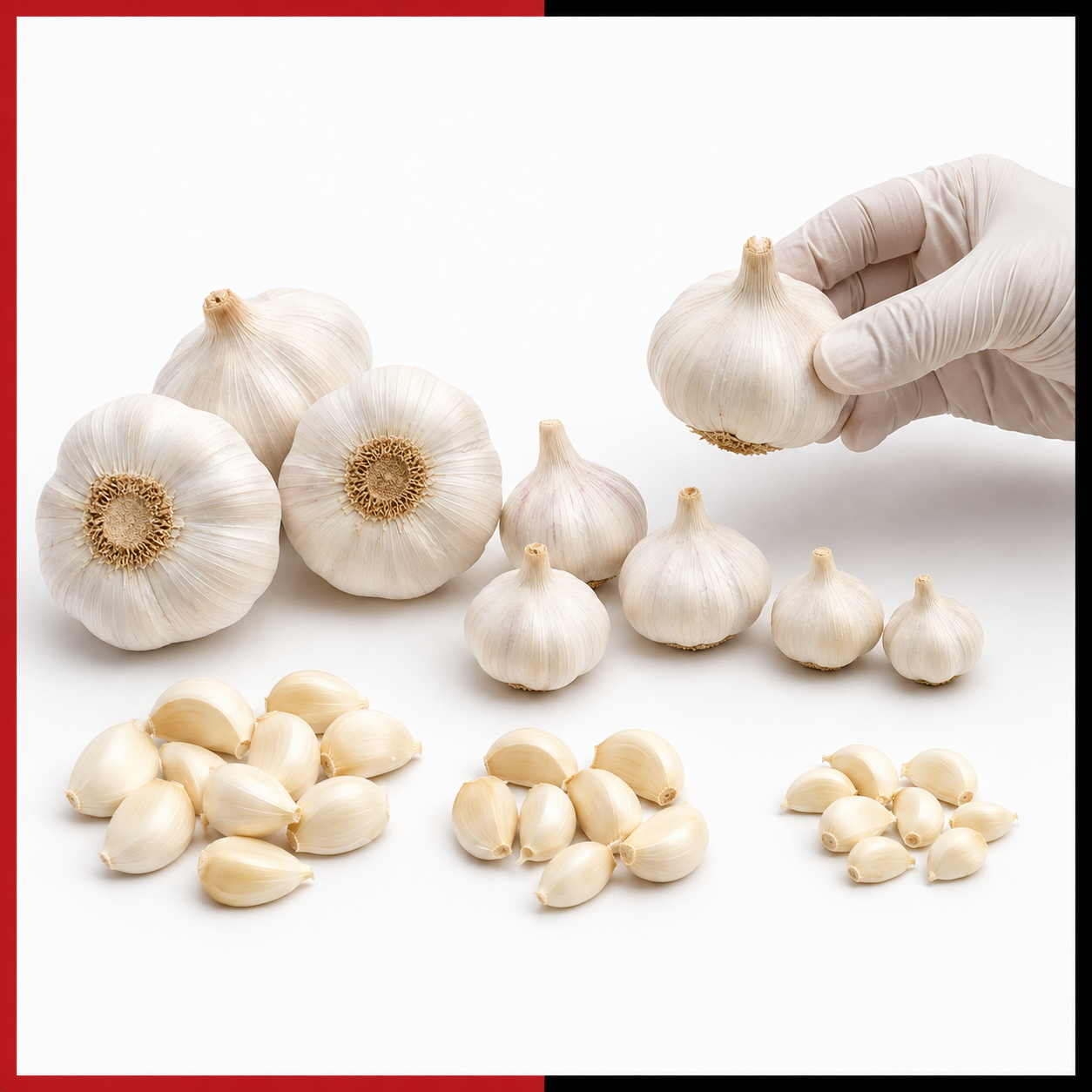
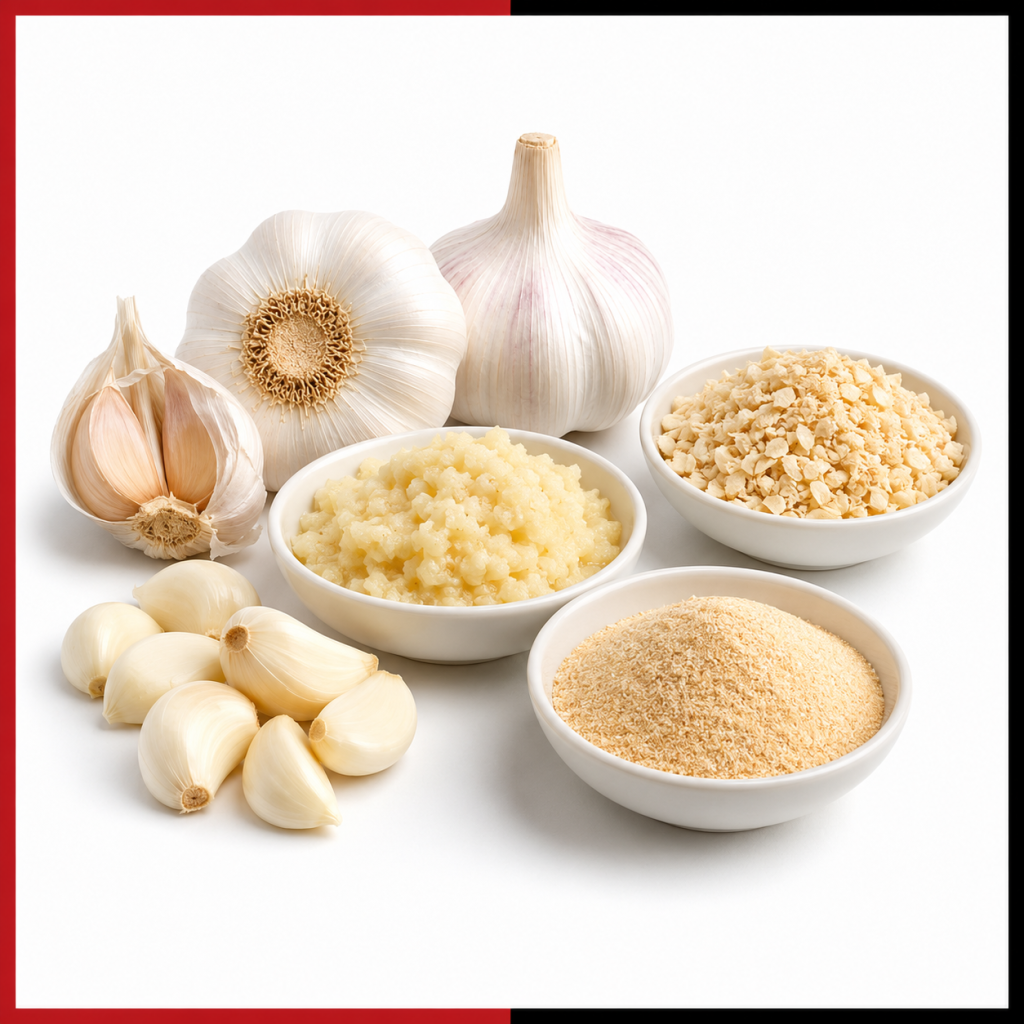
Garlic is an essential ingredient in Indian cooking, food processing and the spice trade. In particular, Shajapur Garlic refers to garlic grown, collected, packed, processed or supplied through Shajapur district in Madhya Pradesh. Depending on the buyer’s needs, sellers may offer it as whole bulbs, separated cloves, garlic paste, flakes, granules or powder.
However, the quality of fresh garlic depends on several factors, including bulb maturity, clove size, curing, moisture, cleanliness and storage. For example, poorly dried garlic may develop mould, sprouting, softness or an unpleasant smell. Therefore, proper curing and careful handling are essential for maintaining freshness and storage life.
As a result, buyers should inspect the actual product instead of relying only on labels such as premium, natural or export quality. Moreover, they should compare the source, appearance, aroma and packaging before purchasing. This guide explains the key features, uses, processing methods, buying checks and storage requirements of Shajapur Garlic.
What Is Shajapur Garlic?
Shajapur Garlic refers to fresh or processed garlic grown, traded, packed or supplied through Shajapur district. Depending on the intended use, buyers may purchase it as whole bulbs, peeled cloves, paste, powder, flakes or granules. Therefore, it can serve household kitchens, restaurants, retailers, wholesalers and food-processing businesses.
Garlic is botanically known as Allium sativum. Its bulb contains several cloves, while thin, papery layers protect them from damage and moisture. Moreover, naturally occurring sulphur compounds give garlic its strong aroma and distinctive flavour. As a result, garlic adds depth and intensity to many cooked and processed food products.
Common commercial forms include:
- Fresh garlic bulbs
- Loose garlic cloves
- Peeled garlic
- Garlic paste
- Garlic powder
- Dehydrated garlic flakes
- Minced garlic
- Garlic granules
- Pickled garlic
- Bulk garlic for processing
The correct product form depends on the buyer’s intended use, storage facilities and processing requirements.
Important Clarification About Shajapur Garlic
Shajapur Garlic should not currently be described as Shajapur’s official One District One Product item. Madhya Pradesh’s official ODOP product list identifies Onion as the selected product for Shajapur.
Garlic may still be cultivated, traded, packed or processed by businesses operating in the district. However, sellers should avoid unsupported claims such as:
- Official Shajapur ODOP Garlic
- GI-tagged Shajapur Garlic
- Government-certified Shajapur Garlic
- Official speciality garlic of Shajapur
Regional sourcing claims should be supported by genuine farm, mandi, packing or supplier records.
Why Is Garlic Commercially Important?
Direct answer: Garlic is commercially important because it is widely used in household cooking, restaurants, packaged foods, pickles, sauces, seasoning blends and dehydrated products. Its supply chain creates opportunities in farming, cleaning, grading, peeling, processing, packaging, transportation and wholesale distribution.
Garlic is used both as a spice and a vegetable ingredient. India also produces and exports fresh and processed garlic products, including dehydrated powder, flakes and dried garlic.
Household and Culinary Importance
Garlic is commonly used in:
- Curries and gravies
- Dal preparations
- Vegetable dishes
- Chutneys
- Pickles
- Marinades
- Sauces
- Soups
- Snacks
- Garlic bread
- Spice pastes
Its flavour may change depending on whether it is used raw, roasted, fried, boiled or dehydrated.
Processing Opportunities
Fresh garlic can be processed into:
- Garlic paste
- Garlic powder
- Dehydrated flakes
- Minced garlic
- Granules
- Pickles
- Seasoning mixtures
- Ready-to-cook products
FSSAI defines dehydrated garlic as a product obtained by suitably drying garlic cloves while retaining the characteristic qualities of fresh garlic after rehydration.
Export Potential
Fresh and dehydrated garlic may be exported when it meets the destination market’s food-safety, residue, packaging, traceability and phytosanitary requirements. APEDA currently lists garlic among India’s fresh vegetable export products and processed garlic among value-added vegetable products.
Fresh Shajapur Garlic
Fresh Shajapur Garlic should have firm bulbs, dry outer skin and well-developed cloves. Moreover, buyers should check the aroma, colour and level of sprouting before making a purchase. However, large bulb size alone does not guarantee better quality. Therefore, buyers should open a few sample bulbs and inspect the cloves for mould, softness or discoloration.
Key Features of Fresh Shajapur Garlic
Firm and Compact Bulbs
Good garlic bulbs should feel firm when gently pressed. Soft or hollow bulbs may indicate moisture loss, ageing or internal deterioration.
Dry Outer Skin
The outer skin should be reasonably dry and papery. Wet or sticky skin can increase the risk of mould and storage damage.
Well-Formed Cloves
The cloves should be properly developed and covered by natural protective layers. Very loose or exposed cloves may become damaged more quickly.
Natural Garlic Aroma
Fresh garlic should have a recognisable garlic smell without mustiness, fermentation or chemical odour.
Minimal Sprouting
Small sprouts may appear during prolonged storage. Excessive sprouting can indicate ageing, unsuitable temperature or high humidity.
Low Foreign Matter
A commercially cleaned garlic lot should contain minimal:
- Soil
- Stones
- Roots
- Loose skins
- Leaves
- Mouldy bulbs
- Damaged cloves
- Unrelated plant material
Uniform Commercial Grade
Garlic bulbs may be graded according to diameter, colour, clove structure, cleanliness and intended market. Natural variation is normal, but buyers should define an acceptable size range for bulk orders.
How Is Shajapur Garlic Cultivated and Processed?
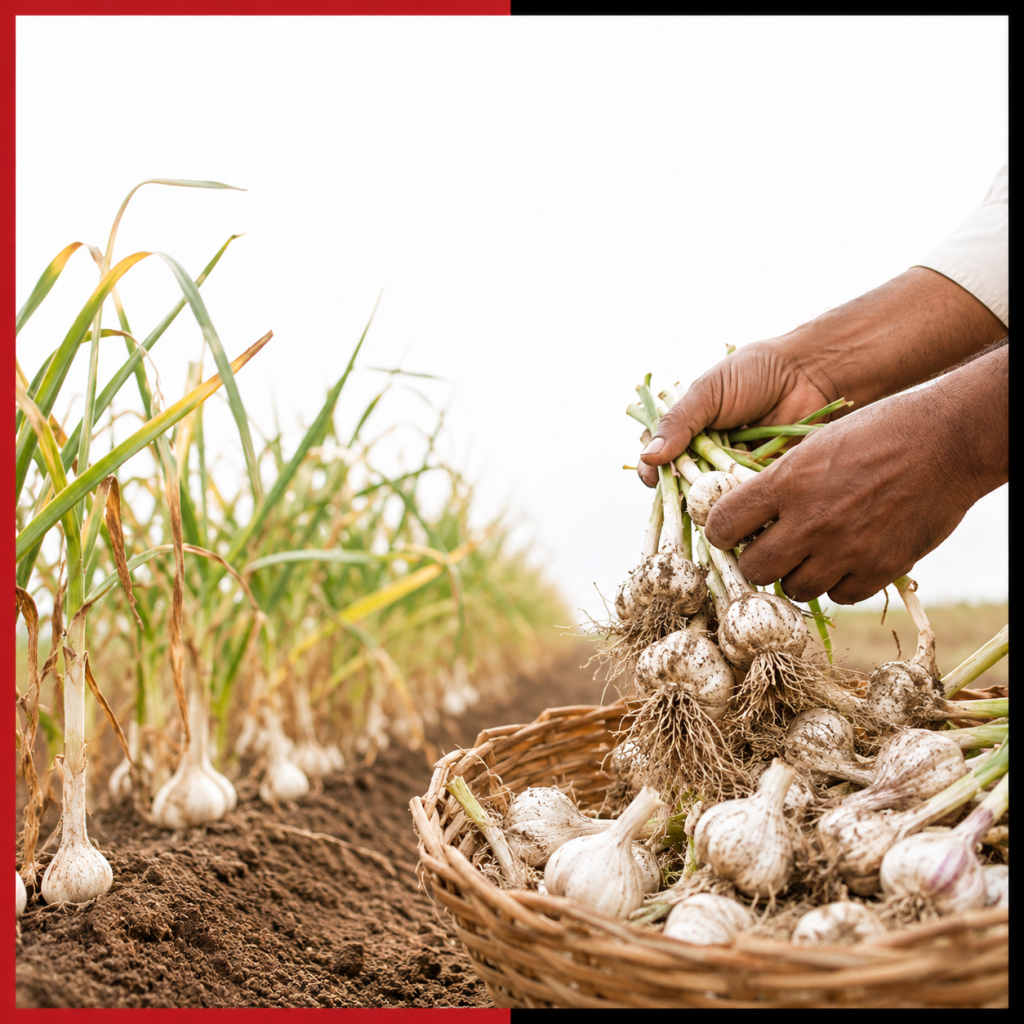
Direct answer: Garlic production generally involves preparing the field, planting healthy cloves, managing irrigation and nutrients, harvesting mature bulbs, curing them, removing excess roots and leaves, grading and packing. Processing units may separate, peel, slice, dry or grind the cloves into value-added products.
Step 1: Selecting Planting Material
Healthy and properly developed cloves are selected for planting. Damaged, diseased or extremely small cloves may produce weak plants.
ICAR’s Directorate of Onion and Garlic Research has a national research mandate covering improved cultivation, varieties, crop management and post-harvest practices for garlic.
Step 2: Field Preparation and Planting
The soil is prepared to provide suitable drainage and a workable seedbed. Individual cloves are planted at appropriate spacing and depth.
Waterlogging can increase crop-health problems, while inadequate moisture can affect bulb development.
Step 3: Crop Management
Farmers monitor:
- Irrigation
- Soil nutrition
- Weed growth
- Insect pests
- Plant diseases
- Bulb development
- Crop maturity
The exact cultivation schedule depends on the variety, soil, weather and irrigation conditions.
Step 4: Harvesting
Garlic is harvested after the bulbs reach maturity. Harvesting too early may result in underdeveloped bulbs, while excessive delay may cause splitting and reduced storage quality.
Step 5: Curing
Freshly harvested bulbs are dried or cured under suitable conditions. Curing helps dry the outer skins, neck and roots before storage.
This stage is important because garlic packed with excessive moisture may become mouldy or begin deteriorating.
Step 6: Cleaning and Grading
After curing, excess soil, roots and dried leaves are removed. Garlic is then graded according to:
- Bulb size
- Colour
- Firmness
- Clove structure
- Cleanliness
- Damage
- Intended market
Step 7: Packing
Garlic should be packed in clean, ventilated material that allows airflow and protects the bulbs from excessive pressure.
Step 8: Value-Added Processing
Garlic intended for dehydration may pass through bulb breaking, clove separation, skin removal, grading, slicing, drying, sorting and packing. Spices Board facilities use similar stages to manufacture dehydrated garlic flakes and related products.
Benefits of Choosing Quality Shajapur Garlic
Stronger Flavour and Aroma
Fresh, properly cured garlic generally offers better aroma and cooking performance than old, damp or deteriorated bulbs.
Lower Processing Waste
Firm and well-developed cloves are easier to peel and process, helping restaurants and manufacturers reduce waste.
Multiple Product Options
Garlic can be sold fresh or converted into paste, flakes, granules, powder and pickles.
Suitability for Retail and Wholesale
Different garlic grades can serve households, grocery stores, restaurants, traders and food-processing companies.
Longer Storage Potential
Properly cured and securely stored bulbs can remain usable longer than garlic exposed to moisture, heat or poor ventilation.
Value Addition
Cleaning, grading, peeling and dehydration can increase the commercial value of raw garlic.
The Spices Board has specifically promoted packing, storage and primary-processing facilities to improve garlic quality for domestic and export markets.
Common Uses of Shajapur Garlic
Shajapur Garlic may be used for:
- Household cooking
- Restaurant gravies
- Garlic chutney
- Pickles
- Ginger-garlic paste
- Sauces and dips
- Spice mixtures
- Garlic bread
- Snacks and namkeen
- Ready-to-cook products
- Dehydrated garlic flakes
- Garlic powder
- Bulk food processing
Fresh bulbs are suitable when a strong natural texture and aroma are required. Dehydrated garlic provides convenience and longer storage when processed and packed correctly.
Common Buying Mistakes
Buying Only by Bulb Size
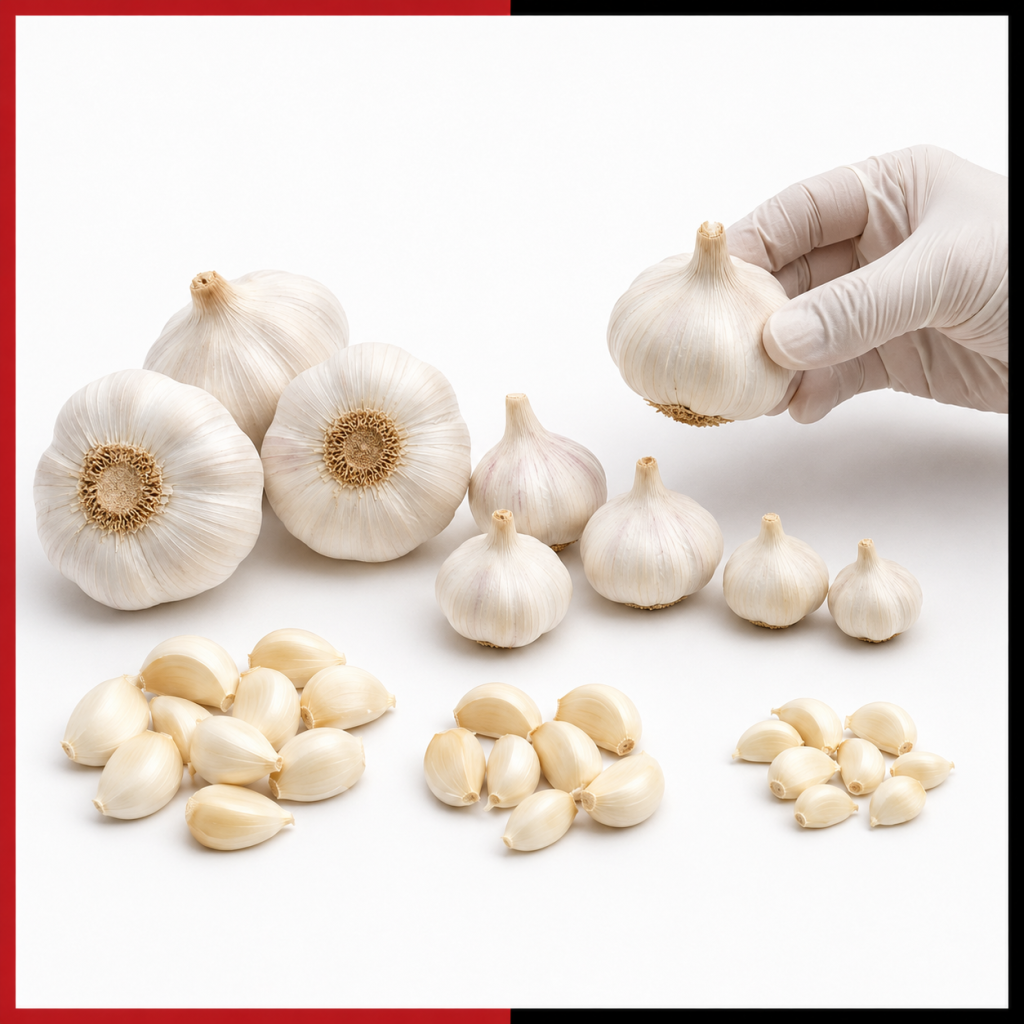
Problem: Buyers assume larger bulbs always provide better quality.
Cause: Firmness, clove structure, moisture and internal damage are ignored.
Solution: Open sample bulbs and inspect the cloves before purchasing.
Ignoring Moisture
Problem: Garlic develops mould or softness during storage.
Cause: The bulbs were packed before proper curing or became wet during transportation.
Solution: Check outer-skin dryness and storage history.
Inspecting Only the Top Layer
Problem: Damaged or smaller bulbs may remain hidden below.
Cause: The buyer checks only visible bags or crates.
Solution: Collect samples from several packages and different depths.
Buying Sprouted Garlic for Long Storage
Problem: The product deteriorates quickly after delivery.
Cause: Sprouted bulbs may already be ageing or stored under unsuitable conditions.
Solution: Choose firm, non-sprouted bulbs for extended storage.
Trusting “Export Quality” Without Specifications
Problem: The product may not meet the buyer’s market requirements.
Cause: Export quality is treated as one universal grade.
Solution: Define bulb size, residue limits, packaging, defects and documentation in writing.
Placing a Bulk Order Without Sampling
Problem: The delivered lot differs from the expected grade.
Cause: No representative sample or quality agreement was used.
Solution: Approve and retain a sample before confirming the full shipment.
How to Buy Shajapur Garlic Safely
First, buyers should confirm the source, harvest period and curing method of the garlic. Next, they should compare samples from different bags instead of checking only the top layer. In addition, commercial buyers should define bulb size, acceptable defects, packaging and delivery terms in writing. As a result, they can reduce wastage, avoid quality disputes and receive more consistent garlic supplies.
Follow these buying steps:
- Decide whether you need fresh bulbs, cloves or processed garlic.
- Ask about the farm, mandi or packing source.
- Confirm the harvest and curing period.
- Check bulb firmness and skin dryness.
- Open sample bulbs and inspect the cloves.
- Look for mould, softness and sprouting.
- Compare samples from different bags.
- Confirm size and grading requirements.
- Review packaging and transportation conditions.
- Approve a trial quantity before bulk purchasing.
Food businesses handling garlic should follow applicable FSSAI hygiene, processing, storage, packaging and labelling requirements. FSSAI’s spice guidance covers controls from post-harvest handling through grinding, packaging and transportation.
Fresh Garlic vs Dehydrated Garlic
| Feature | Fresh Garlic | Dehydrated Garlic |
| Form | Whole bulbs or cloves | Flakes, granules or powder |
| Moisture | Naturally higher | Reduced through drying |
| Aroma | Strong fresh character | Concentrated but different |
| Preparation | Peeling and chopping required | Usually ready to use |
| Storage | Requires ventilation | Requires moisture-proof packing |
| Common buyers | Homes, restaurants and retailers | Food processors and seasoning businesses |
| Quality checks | Firmness, mould and sprouting | Colour, moisture and foreign matter |
Neither form is automatically better. Fresh garlic suits recipes requiring natural texture, while dehydrated garlic is practical for industrial processing and shelf-stable seasoning products.
Shajapur Garlic vs Unverified Generic Garlic
| Factor | Verified Shajapur Garlic | Unverified Generic Garlic |
| Regional connection | Shajapur source or supply records available | Origin may be unclear |
| Harvest information | Can be requested | Often unavailable |
| Grading | May be defined before purchase | May contain mixed sizes |
| Traceability | Farm, mandi or supplier details possible | Usually limited |
| Processing suitability | Can be selected by grade | May vary |
| Best suited for | Buyers seeking documented regional supply | General price-based buying |
The Shajapur name should only be used when the garlic is genuinely cultivated, traded, packed or processed through the district’s supply chain.
Best Garlic Manufacturer and Supplier in Shajapur
Shajapur may have garlic farmers, mandi traders, cleaning and grading units, packers, wholesalers and food processors, but no official authority ranks one business as the best garlic manufacturer or supplier. Buyers should compare bulb freshness, source traceability, curing quality, grading accuracy, processing hygiene, food-safety compliance, packaging, supply capacity, pricing and delivery performance before choosing a supplier.
Best Practices for Garlic Buyers
- Match the garlic grade with its final use.
- Inspect multiple bulbs from each lot.
- Avoid wet, soft or mouldy garlic.
- Open bulbs to check internal cloves.
- Confirm the harvest and packing dates.
- Specify the acceptable bulb-size range.
- Use ventilated packaging for fresh garlic.
- Request laboratory reports for regulated or export orders.
- Record rejection and replacement conditions.
- Monitor the stock immediately after delivery.
How to Store Fresh Garlic
Direct answer: Fresh garlic should be stored in a dry, cool and well-ventilated location. Avoid sealed, humid conditions because trapped moisture can encourage mould and sprouting. Bulk stock should be inspected regularly, and damaged bulbs should be removed before they affect nearby produce.
Storage Tips
- Store only properly cured bulbs.
- Keep garlic away from direct sunlight.
- Use mesh bags, crates or ventilated containers.
- Avoid wet floors and damp walls.
- Do not wash bulbs before long-term storage.
- Remove mouldy or soft garlic immediately.
- Keep different batches separate.
- Follow first-in, first-out rotation.
- Protect stock from insects and rodents.
- Avoid crushing bulbs under heavy loads.
Garlic quality and export value can be improved through suitable packing and storage systems, which is why the Spices Board has promoted dedicated garlic post-harvest infrastructure.
Frequently Asked Questions
Shajapur Garlic refers to garlic grown, traded, packed, processed or supplied through Shajapur district in Madhya Pradesh. It may include fresh bulbs, separated cloves, paste, flakes, granules and powder. Buyers should verify the actual source and product grade before making regional claims.
No. Madhya Pradesh’s official ODOP list identifies Onion as Shajapur’s selected product. Garlic may still be cultivated or traded in the district, but it should not be marketed as the official Shajapur ODOP product without updated government recognition.
Fresh garlic should have firm bulbs, dry outer skin and well-developed cloves. Avoid bulbs that feel soft, wet, hollow or excessively sprouted. A sample bulb should be opened to check for internal mould, discoloration or shrivelled cloves.
Yes. Farmers, mandi traders, wholesalers, packers and processors may supply garlic in bulk. Buyers should confirm the grade, bulb size, curing, packaging, net weight, delivery schedule and acceptable defects before completing an order.
Dehydrated garlic is produced by drying prepared garlic cloves through a suitable controlled method. It may be sold as flakes, granules, minced garlic or powder. FSSAI standards require the product to retain characteristic garlic qualities after rehydration.
Export quality is not a universal grade. It means that a consignment meets the importing country and buyer’s requirements for size, cleanliness, residues, plant health, packaging, traceability and documentation. Current destination-specific conditions must be verified before shipment.
Key Takeaways
- Shajapur Garlic may be sold fresh or as processed garlic products.
- Onion, not Garlic, is Shajapur’s current official ODOP product.
- Good garlic should be firm, dry and free from mould.
- Buyers should inspect internal cloves, not only outer skins.
- Curing and ventilation strongly affect storage quality.
- Fresh and dehydrated garlic serve different market needs.
- Bulk orders should include clear grading specifications.
- Export claims require testing and destination-specific compliance.
- No supplier should be called the best without comparing actual quality and performance.
Final Verdict
Shajapur Garlic can serve household, restaurant, retail, wholesale and food-processing requirements when it is properly matured, cured, graded and stored.
However, the regional name alone does not guarantee the quality of every shipment. Buyers should inspect bulb firmness, clove development, moisture, sprouting, mould and packaging before purchasing.
For household use, choose clean and firm bulbs in a manageable quantity. Commercial buyers should approve representative samples and document all quality, packing and delivery conditions before placing a large order.
Conclusion
Shajapur Garlic can offer useful opportunities for farmers, traders, packers and food processors working within the district’s agricultural supply chain. Its versatility allows it to be sold as fresh bulbs or converted into paste, powder, flakes and other value-added products.
Buyers should focus on verified sourcing, proper curing, firm cloves, low moisture and secure packaging. Businesses handling processed garlic should also follow the applicable food-safety and labelling standards.
Careful inspection, transparent specifications and suitable storage can reduce waste while preserving garlic’s aroma, flavour and commercial value.
Leave a Reply