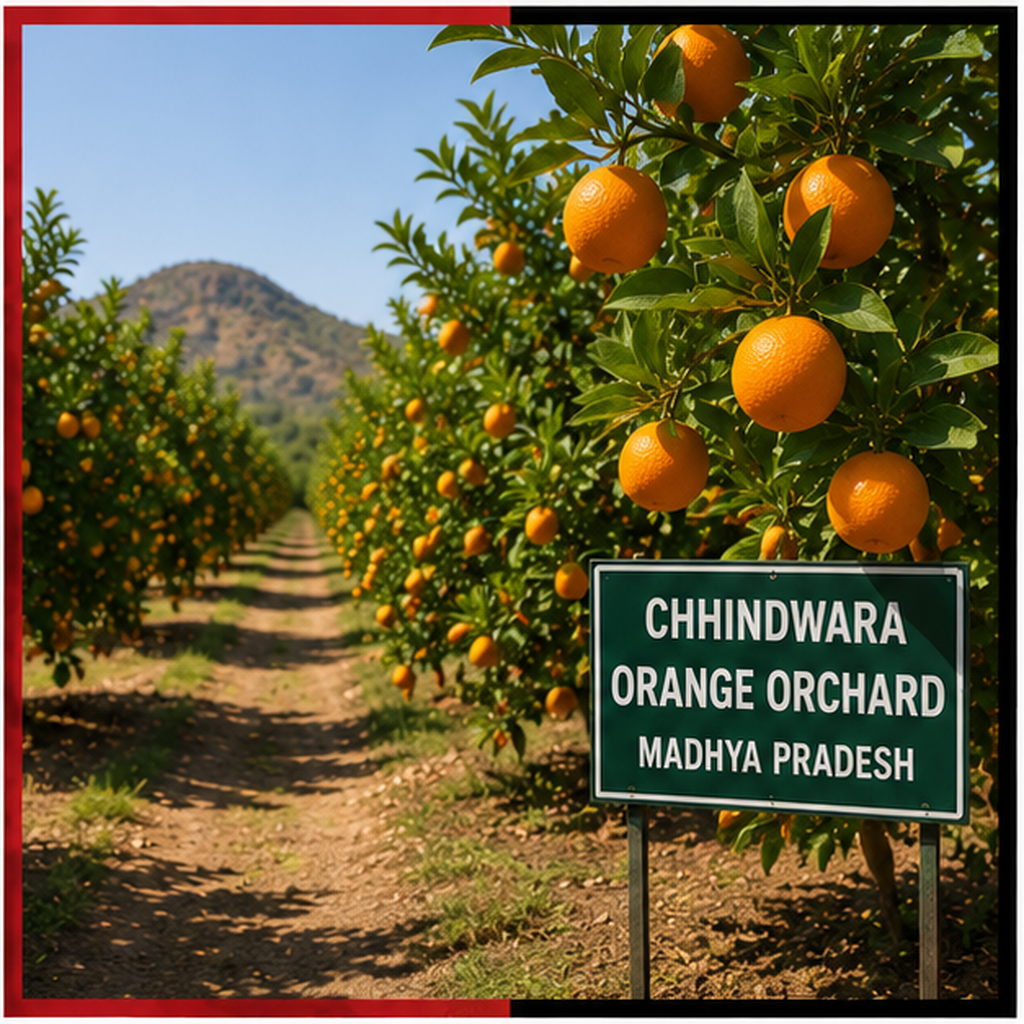
The bright colour, refreshing flavour and commercial value of Chhindwara Oranges give this fruit a strong identity in Madhya Pradesh’s horticulture sector. In particular, Chhindwara forms part of an important citrus-growing belt near the Maharashtra border. Moreover, suitable farming conditions in this region support orange cultivation, fruit trading and post-harvest activities.
The official Chhindwara district portal identifies oranges as one of the region’s notable natural crops. Specifically, it highlights orange cultivation around the Sausar area and the wider border belt connected with the Nagpur fruit market. In addition, Madhya Pradesh’s One District One Product programme lists Chhindwara Orange as the district’s selected product. As a result, the fruit has gained a stronger regional and commercial identity.
Farmers, traders and suppliers provide these oranges for fresh consumption, wholesale fruit markets, retail distribution and food processing. However, variety, maturity, harvesting, grading, storage and transportation can affect the quality of each lot. Therefore, buyers should inspect the fruit carefully before placing an order.
Overall, this guide explains the key features, cultivation process, uses, benefits, quality checks and buying considerations for fresh Chhindwara Oranges.
What Are Chhindwara Oranges?
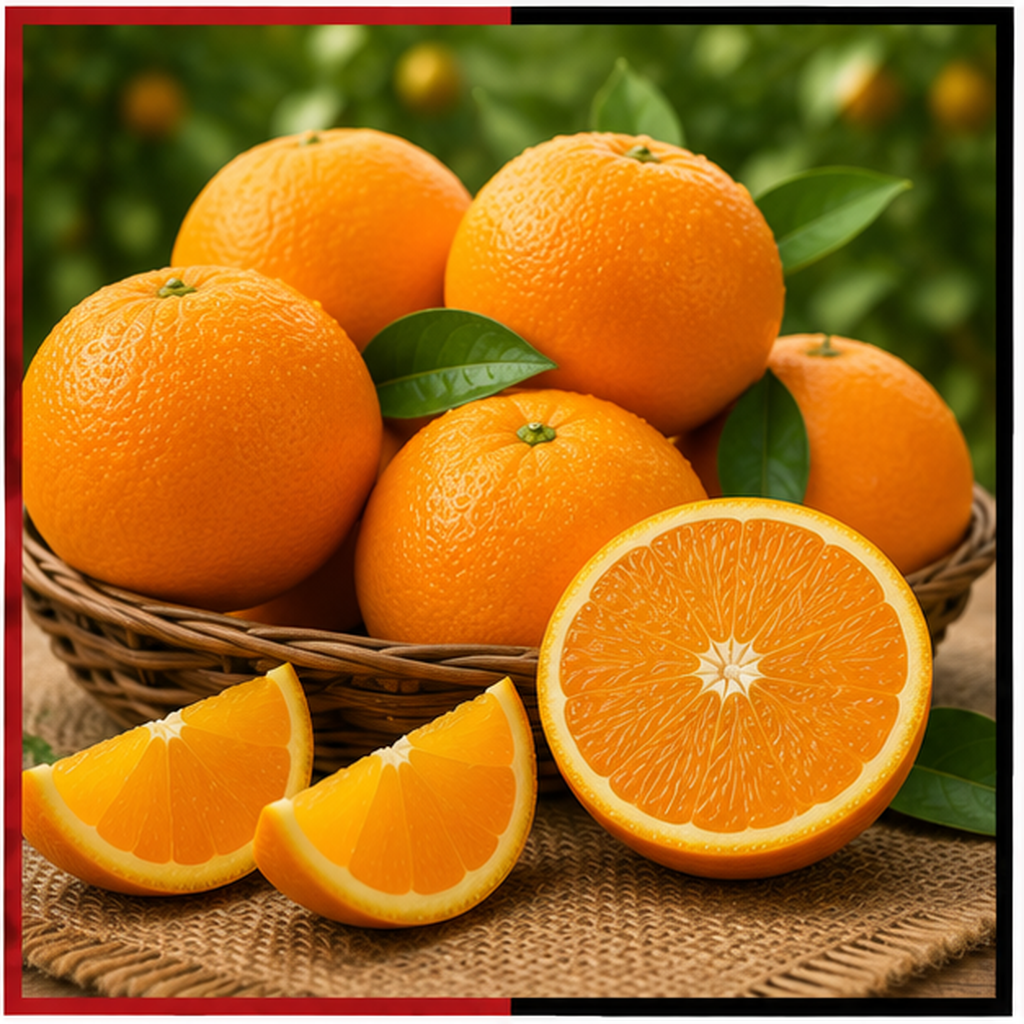
answer: Chhindwara Oranges are citrus fruits that farmers grow in the orange-producing areas of Chhindwara district in Madhya Pradesh. Primarily, buyers value them for their juicy segments and balanced sweet-tangy flavour. Furthermore, retailers, wholesalers and food processors use them for fresh consumption and products such as juice, squash, jam and syrup.
Chhindwara lies in the southern part of Madhya Pradesh, close to Maharashtra. Consequently, its location connects local agricultural markets with Nagpur and other major trading centres. Therefore, growers and suppliers can access wider retail, wholesale and processing markets more easily.
The district administration notes that oranges cultivated in the regional belt are also supplied towards Nagpur, a major orange-trading centre.
The product may be marketed using terms such as:
- Chhindwara Oranges
- Chhindwara Orange
- Fresh Chhindwara Oranges
- Sausar Oranges
- Madhya Pradesh Oranges
- Farm Fresh Oranges
- Wholesale Oranges from Chhindwara
- Export Quality Oranges
- Natural Indian Oranges
These names should not replace proper product specifications. Buyers should still verify the source, variety, grade and harvesting date.
Why Are Chhindwara Oranges Important?
Direct answer: Chhindwara Oranges are important because they support farmers, farm workers, traders, transporters, fruit graders, packers and processors. Their regional identity also creates opportunities in fresh-fruit marketing, juice production, cold-chain development, wholesale trade and value-added citrus products.
Orange has been officially identified as the One District One Product selection for Chhindwara under Madhya Pradesh’s ODOP programme. The programme aims to promote district-specific products, improve market access and encourage production and export potential.
Agricultural Importance
Orange cultivation provides farmers with a commercially valuable horticultural crop. A productive orchard can supply fruit over multiple harvest seasons when it is managed properly.
Employment Generation
The orange supply chain involves:
- Orchard owners
- Agricultural workers
- Harvesting teams
- Fruit graders
- Packaging workers
- Transport operators
- Commission agents
- Wholesalers
- Retailers
- Food processors
Regional Market Connection
Chhindwara’s position near Maharashtra gives the region access to important fruit markets. The official district page specifically notes the movement of oranges from its cultivation belt towards Nagpur.
Processing Potential
Oranges that are suitable for consumption but do not meet premium visual standards may still be used in regulated food-processing operations.
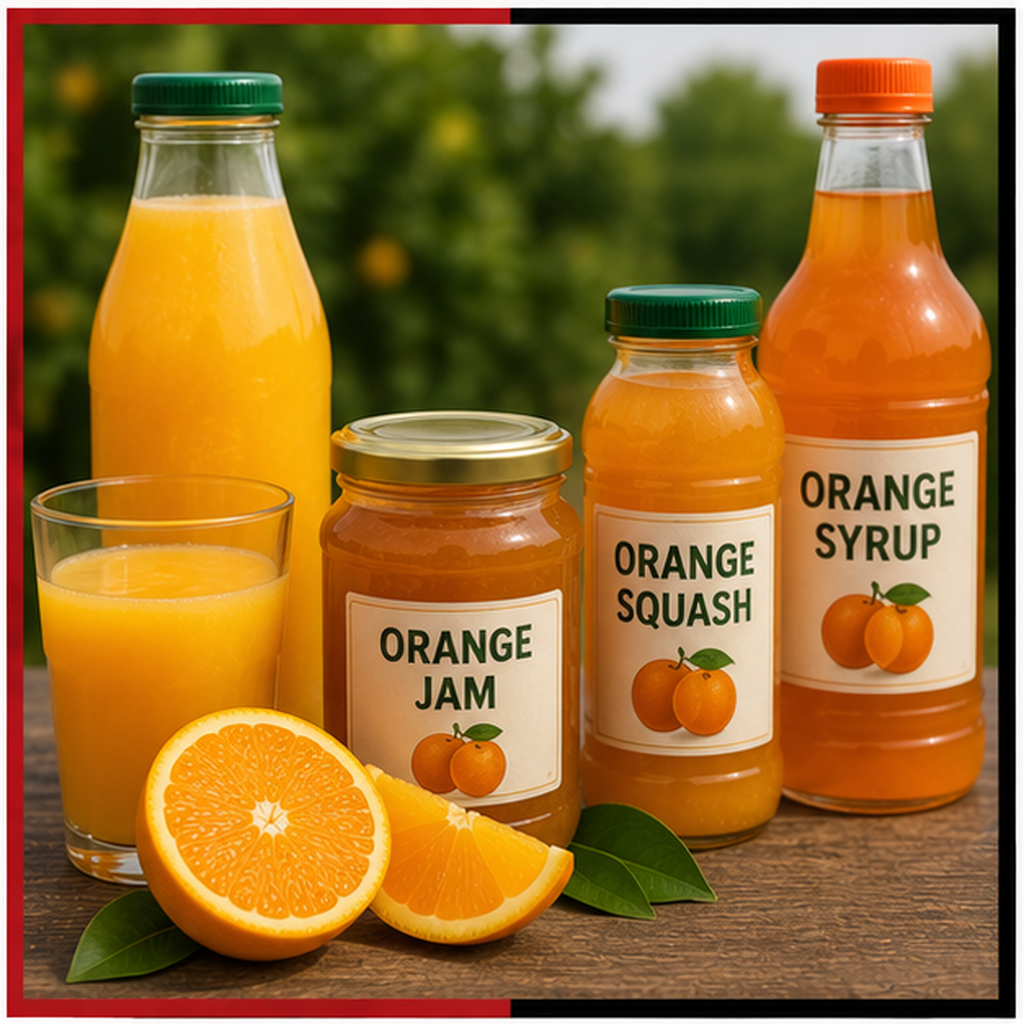
Potential orange products include:
- Juice
- Squash
- Syrup
- Jam
- Marmalade
- Concentrate
- Flavoured beverages
- Candied peel
- Essential oil
- Citrus-based ingredients
Government planning documents for the region have also identified orange juice, jam, squash, syrup, essential oil and related products as possible value-addition opportunities.
Key Features of Fresh Chhindwara Oranges
The quality of an orange should be judged through its actual condition rather than promotional terms alone.
Natural Sweet-Tangy Flavour
Good-quality oranges generally offer a balance of sweetness and acidity. The flavour may vary according to the variety, weather, maturity and harvesting stage.
Juicy Segments
Fresh fruit should normally contain firm, juicy segments. Dry or fibrous flesh may indicate old fruit, moisture loss or unsuitable harvesting.
Attractive Peel Colour
Depending on the variety and maturity, the peel may range from greenish-orange to deeper orange.
Peel colour alone does not always indicate internal sweetness. Buyers should examine maturity and fruit condition together.
Firm Texture
The fruit should feel reasonably firm without being excessively hard, soft or shrivelled.
Natural Size Variation
Farm-grown oranges may not all have identical dimensions. Commercial orders are therefore graded into different size categories.
Distinct Citrus Aroma
Fresh oranges usually develop a clean citrus aroma, especially when the peel is scratched or cut.
An unpleasant fermented or mouldy smell can indicate spoilage.
How Are Chhindwara Oranges Grown and Marketed?
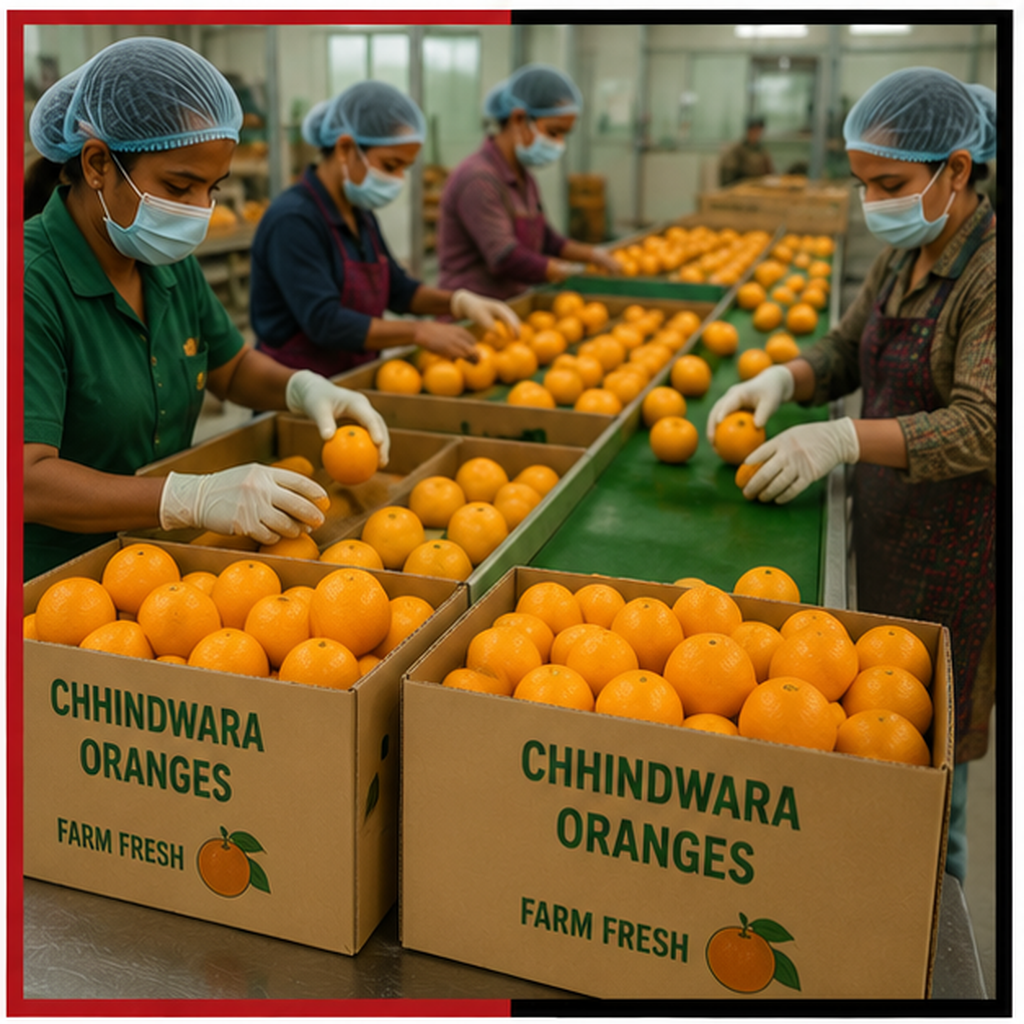
Direct answer: Chhindwara Oranges move through a supply chain that includes orchard planning, crop management, maturity assessment, harvesting, grading, packaging, transportation and sale. Careful handling is important because citrus fruit may lose moisture, develop bruises or become damaged during rough packing and transport.
Step 1: Orchard Establishment
Farmers select suitable land and healthy planting material. Proper spacing is maintained so the trees receive enough sunlight, airflow and space for growth.
Step 2: Crop Management
The orchard requires irrigation, nutrient management, pruning, weed control and crop-protection measures.
Farmers also monitor plant health and fruit development throughout the growing cycle.
Step 3: Maturity Assessment
Fruit should be harvested at a maturity stage suitable for its destination.
Oranges intended for a nearby market may be harvested at a different stage from fruit that must travel over a long distance.
Step 4: Harvesting
The fruit is carefully removed from the tree to reduce peel damage.
Pulling, dropping or throwing oranges can create cuts and bruising that reduce storage life.
Step 5: Sorting and Grading
Harvested oranges are sorted according to:
- Size
- Colour
- Maturity
- Shape
- Peel quality
- Visible damage
- Intended market
Damaged, diseased or unsuitable fruit should be separated.
Step 6: Packaging
Oranges may be packed in crates, cartons, nets or other suitable containers.
Packaging should allow ventilation while reducing pressure and movement during transportation.
Step 7: Transportation and Distribution
Packed fruit is transported to local markets, wholesale mandis, retailers, processors or larger distribution centres.
APEDA records also show farmer-producer activity involving oranges in the Chhindwara regional belt, supporting the importance of organised cultivation and marketing.
Benefits of Choosing Fresh Chhindwara Oranges
Recognised Regional Source
Chhindwara has an established identity as an orange-producing district under Madhya Pradesh’s ODOP programme.
Suitable for Fresh Consumption
Firm and properly matured oranges can be consumed directly or used in fruit salads, desserts and beverages.
Useful for Food Processing
Different grades of fruit may be used for juice, squash, syrup, jam, concentrate and other processed products.
Wholesale Supply Potential
The regional cultivation and marketing network can support fruit traders, retailers, caterers and processing businesses.
Opportunity for Farmer-Based Sourcing
Retailers and institutional buyers may work with farmer groups, cooperatives and producer organisations for more organised procurement.
Scope for Better Post-Harvest Handling
APEDA-supported infrastructure records refer to pack-house development at Umranala and Sausar, along with collection centres in the former wider Chhindwara production region. This highlights the importance of grading, packing and organised post-harvest systems for the orange trade.
Common Uses of Chhindwara Oranges
Fresh Chhindwara Oranges can be used in several household and commercial applications.
- Direct consumption
- Fresh orange juice
- Fruit salads
- Smoothies
- Mocktails
- Cakes and desserts
- Jam and marmalade
- Squash and syrup
- Flavoured beverages
- Candied orange peel
- Food garnishing
- Citrus extracts
- Institutional catering
- Retail fruit distribution
The intended use should influence the grade purchased. Premium-looking fruit may be chosen for retail display, while processing units may focus more on juice content, maturity and flavour.
Challenges and Common Buying Mistakes
Selecting Oranges Only by Peel Colour
Problem: Bright colour is assumed to guarantee sweetness.
Cause: External appearance is easier to judge than internal quality.
Solution: Check maturity, firmness, aroma, fruit weight and a cut sample before purchasing in bulk.
Ignoring the Harvest Date
Problem: Older fruit may have less juice and freshness.
Cause: Buyers focus only on price and appearance.
Solution: Ask when the fruit was harvested, graded and dispatched.
Not Defining the Grade
Problem: The delivered lot contains mixed sizes and quality.
Cause: The order does not include written specifications.
Solution: Define size, permissible defects, maturity and packaging before confirming the order.
Choosing the Lowest Price
Problem: A cheap lot may create greater wastage.
Cause: Damaged, dry or overripe fruit may be mixed into the supply.
Solution: Compare the usable quantity and expected shelf life, not only the price per kilogram.
Using Weak Packaging
Problem: Fruit becomes bruised or compressed in transit.
Cause: Packages are overloaded or stacked incorrectly.
Solution: Select ventilated and appropriately sized packaging.
Placing a Bulk Order Without Testing
Problem: The fruit may not match the required sweetness, size or juice content.
Cause: No sample or pre-dispatch inspection is performed.
Solution: Purchase a trial lot or inspect a representative sample first.
Best Practices for Buying Chhindwara Oranges
- Confirm that the oranges are sourced from the stated production area.
- Define whether the fruit is required for retail, wholesale or processing.
- Ask for the harvest and packing dates.
- Check firmness, weight and peel condition.
- Cut and taste a representative sample.
- Specify the required size and maturity grade.
- Avoid fruit with mould, leakage or deep cuts.
- Confirm packaging and transportation conditions.
- Request recent photographs or videos for remote orders.
- Record price, quantity, rejection and replacement terms in writing.
Chhindwara Oranges vs Unverified Generic Oranges
| Factor | Verified Chhindwara Oranges | Unverified Generic Oranges |
| Regional source | Chhindwara production area identified | Origin may be unclear |
| Traceability | Can be requested from the seller | May be limited |
| Product grading | Defined according to the order | May contain mixed grades |
| Harvest information | Can be confirmed | May not be available |
| Wholesale potential | Supported by a known regional cluster | Depends on the supplier |
| Processing suitability | Can be selected by grade | Quality may vary |
| Best suited for | Buyers seeking regional sourcing | General price-based buying |
The term “Chhindwara Orange” should describe the genuine source of the fruit. Buyers should request supporting farm, seller or dispatch details when origin is commercially important.
Fresh Oranges vs Processed Orange Products
| Feature | Fresh Oranges | Processed Orange Products |
| Form | Whole fruit | Juice, jam, syrup or concentrate |
| Storage period | Relatively limited | Usually longer when processed safely |
| Main quality factors | Freshness, size and maturity | Ingredients, processing and packaging |
| Handling needs | Careful fruit handling | Food-processing controls |
| Common buyers | Households and fruit retailers | Food businesses and institutions |
| Wastage risk | Higher if fruit is not sold quickly | Depends on processing and storage |
Both categories have value. Fresh fruit suits direct consumption, while processing can create additional markets and reduce some appearance-based wastage.
Best Orange Manufacturer and Supplier in Chhindwara
Chhindwara has numerous orange farmers, producer groups, traders, packers and fruit suppliers, but no official authority ranks one business as the best orange manufacturer or supplier. Buyers should compare fruit freshness, farm source, grading quality, packaging, supply capacity, food-safety practices, pricing and delivery performance before selecting a supplier for retail, wholesale, processing or export-oriented requirements.
How to Check Orange Quality Before Buying
Direct answer: Check orange quality by examining firmness, peel condition, fruit weight, aroma and internal juiciness. Good fruit should not have mould, deep cuts, excessive softness or a fermented smell. Bulk buyers should inspect multiple oranges from different parts of the lot before approving the shipment.
Use this quality checklist:
- Hold the orange and check its weight.
- Examine the peel for cuts and mould.
- Check for excessively soft areas.
- Smell the fruit for signs of fermentation.
- Cut samples from different boxes.
- Check segment juiciness.
- Compare fruit size and maturity.
- Review the packaging condition.
- Inspect the bottom layers of the consignment.
- Record accepted and rejected quality levels.
A single attractive fruit is not enough to represent an entire commercial shipment.
Storage and Handling Tips
Store in a Cool, Ventilated Place
Heat and poor ventilation may speed up moisture loss and spoilage.
Avoid Rough Handling
Throwing or dropping fruit can damage the peel and internal segments.
Separate Damaged Fruit
One mouldy or leaking orange can affect nearby fruit.
Follow First-In, First-Out Rotation
Sell or process older stock before newly delivered fruit.
Keep Storage Areas Clean
Boxes, floors and handling equipment should be kept free from spoiled fruit and contamination.
Avoid Excessive Stacking
Heavy loads may compress the lower cartons or crates.
Monitor the Fruit Regularly
Inspect stock for softness, mould and moisture loss during storage.
Frequently Asked Questions
Chhindwara is known for orange cultivation in its southern agricultural belt near the Maharashtra border. The district’s location also connects growers with major fruit markets around Nagpur. Orange is officially listed as Chhindwara’s One District One Product selection.
The official district portal highlights orange cultivation around Sausar and the wider border-side production belt. Administrative boundaries have changed over time, and Pandhurna is now a separate neighbouring district west of Chhindwara.
Buyers can source them from local fruit markets, traders, farmer groups, wholesalers and verified agricultural suppliers. Check the farm source, harvest date, grade, packaging and transportation terms before placing an order.
Fresh oranges should feel firm and relatively heavy for their size. The peel should be free from mould, leakage and deep cuts. A sample fruit should contain juicy segments and should not smell fermented or stale.
Yes. Traders, wholesalers, retailers and processors may purchase regional oranges in larger quantities. Bulk buyers should define the grade, size range, maturity, packaging, delivery schedule and permissible defects before confirming an order.
Yes. Oranges with suitable juice content, flavour and maturity can be used for juice, squash, syrup, jam and other processed products. Processors should evaluate samples and follow applicable food-safety and quality requirements.
Key Takeaways
- Chhindwara Oranges are an important regional horticultural product.
- Orange is listed as Chhindwara’s ODOP product.
- Sausar forms an important part of the district’s orange-growing belt.
- Quality depends on maturity, freshness, grading and handling.
- Bright peel colour alone does not guarantee sweetness.
- Buyers should inspect multiple samples before bulk purchasing.
- Written grade and packaging specifications reduce disputes.
- Fresh oranges can be consumed directly or used for processing.
- No supplier should be ranked as the best without comparing actual performance.
Final Verdict
Chhindwara Oranges offer strong potential for fresh-fruit retail, wholesale distribution and value-added processing. Their regional production identity and connection with nearby trading markets make them commercially significant.
However, regional origin alone cannot guarantee that every fruit or shipment will have identical quality. Buyers should judge each order according to freshness, firmness, maturity, juiciness, grading and packaging.
Household buyers should choose quantities they can consume while fresh. Commercial buyers should inspect a sample and confirm written quality requirements before ordering in bulk.
Conclusion
Chhindwara Oranges represent an important part of Madhya Pradesh’s horticultural economy. Their refreshing flavour, processing potential and connection with the Sausar-side orange-growing belt make them useful for consumers, retailers, wholesalers and food businesses.
Buyers looking for fresh Chhindwara Oranges should verify the source, harvest date, maturity, grading and packaging. Commercial purchasers should also compare supplier capacity and delivery performance.
Careful inspection and proper handling can reduce wastage, protect fruit quality and support genuine farmers and businesses associated with the regional orange trade.
Leave a Reply