
Coriander ranks among the most widely used spices in Indian kitchens. Its seeds add a warm, citrus-like aroma to curries, pickles, spice blends and snacks, while cooks use fresh leaves for garnishing and flavour. In particular, Damoh Coriander refers to coriander seeds, fresh leaves or processed dhaniya that farmers, traders and processors handle through Damoh district in Madhya Pradesh.
However, coriander quality can vary significantly from one lot to another. Seed maturity, drying, cleaning, moisture, storage and grinding methods all influence aroma, purity and shelf life. Therefore, buyers should look beyond attractive packaging and compare freshness, colour, source, cleanliness and processing standards before purchasing.
Overall, this guide explains the qualities, uses, processing methods, benefits, buying checks and storage requirements of Damoh Dhaniya. Moreover, it helps household buyers, retailers, restaurants and bulk purchasers make safer and more informed decisions.
What Is Damoh Coriander?
answer: Damoh Coriander refers to whole coriander seeds, fresh coriander leaves or processed coriander products that farmers cultivate and businesses handle or supply through Damoh district. Depending on the buyer’s needs, suppliers may offer whole seeds for cooking and grinding, fresh leaves for retail use, or processed forms for spice manufacturing and food production.
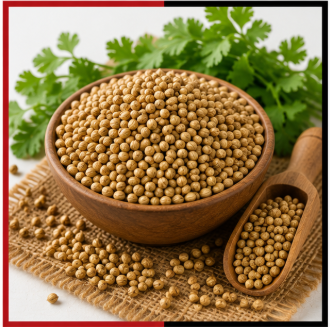
Coriander belongs to the Apiaceae family. The plant produces aromatic leaves and small, round fruits that traders commonly sell as coriander seeds. According to the Spices Board of India, the fruit generally has a globular shape, measures around 3–4 mm in diameter and ranges from pale white to light brown.
Common market forms include:
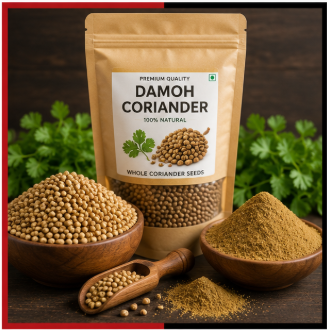
Whole coriander seeds
Split coriander seeds
Coriander powder
Fresh coriander leaves
Roasted coriander
Coriander for spice blends
Retail dhaniya packets
Wholesale coriander bags
Food-processing-grade coriander
Whole coriander and ground coriander require different quality checks. For example, whole seeds let buyers inspect colour, cleanliness and physical condition more easily. In contrast, powder requires greater confidence in the processor, packaging and quality-control system.
Important Clarification About Damoh Coriander
Damoh Coriander should not currently carry the label of Damoh’s official One District One Product item. Instead, Madhya Pradesh’s published ODOP list names Gram as Damoh’s selected product and lists coriander for Guna and Neemuch.
Nevertheless, farmers and traders in Damoh may still cultivate, process and sell coriander. Therefore, buyers and publishers should avoid unsupported claims such as “official Damoh ODOP coriander,” “government-certified Damoh coriander” or similar regional-speciality statements without documentary proof.
Why Is Coriander Important?
answer: Coriander matters because its seeds and leaves support extensive culinary and commercial applications. Moreover, the crop creates opportunities for farmers, traders, spice processors, wholesalers, retailers, restaurants and food manufacturers. Businesses can sell coriander whole, grind it into powder or combine it with other spices to create value-added products.
The Spices Board describes coriander as an important spice crop with a major role in food flavouring. In addition, cooks and food businesses value both the leaves and dried fruits because each form provides a distinctive aroma and taste.
Culinary Importance
Cooks use whole coriander seeds in:
Curries and gravies
Pickles
Chutneys
Spice blends
Roasted masalas
Snacks
Lentil preparations
Marinades
Furthermore, coriander powder forms an essential base for many Indian masalas.
Commercial Importance
Coriander creates opportunities in:
Agricultural production
Cleaning and grading
Spice grinding
Retail packaging
Wholesale supply
Food processing
Export trade
Restaurants and catering
Meanwhile, the Spices Board promotes Indian spices and helps exporters connect with overseas buyers.
Processing Potential
Processors can turn raw coriander seeds into cleaned whole spices, roasted seeds, coriander powder and blended masalas. As a result, proper processing improves convenience, consistency and market value.
Key Features of Pure Damoh Coriander
Natural Aroma
Fresh coriander seeds should release a pleasant, warm and mildly citrus-like aroma. However, weak fragrance may indicate ageing, poor storage or excessive moisture exposure.
Uniform Appearance
Good-quality seeds should show reasonably consistent size and a natural light-brown to yellowish-brown colour. Nevertheless, minor natural differences can occur between varieties and harvest lots.
Low Foreign Matter
Clean coriander should contain minimal dust, stones, stems, husk, insects and unrelated seeds. Therefore, bulk buyers should inspect samples from different parts of the bag rather than checking only the top layer.
Proper Dryness
Seeds should feel dry and flow freely. In contrast, damp coriander can develop mould, unpleasant odours and a shorter storage life. Consequently, commercial buyers should confirm moisture specifications before approving large orders.
Minimal Damage
A commercial lot should contain very few broken, blackened, insect-damaged or shrivelled seeds. Moreover, buyers should reject lots that show webbing, live insects or visible mould.
Clean Taste
Coriander should not taste bitter, stale, chemical or mouldy. For better assurance, bulk buyers should roast and grind a small sample before approving the complete lot.
How Is Damoh Coriander Processed?
Direct answer: Coriander processing generally involves harvesting mature plants, drying them, separating the seeds, cleaning, grading and packing. For coriander powder, processors inspect the seeds and grind them in hygienic equipment. Above all, proper drying and moisture control help preserve aroma and reduce spoilage risks.
Step 1: Crop Cultivation
Farmers prepare suitable land, choose seed varieties and manage irrigation, nutrients, weeds, pests and diseases. According to the Spices Board’s cultivation guidance, coriander performs best when farmers provide suitable soil conditions and manage field moisture carefully.
Step 2: Maturity and Harvesting
Farmers harvest the crop when the fruits reach the required maturity and begin developing their characteristic seed colour. However, early harvesting may produce immature seeds, while delayed harvesting can increase shattering and field losses.
Step 3: Drying
After harvesting, workers dry the plants or seeds to reduce moisture. Moreover, they should use a clean surface and protect the crop from dust, animals and other contaminants. Improper drying can reduce colour, aroma and storage stability.
Step 4: Threshing
Next, workers thresh the dried crop to separate coriander seeds from stems and other plant material.
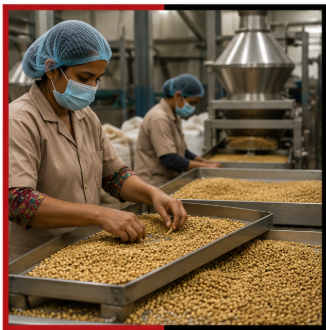
Step 5: Cleaning and Grading
Processors clean the seeds to remove:
Dust
Stones
Plant matter
Damaged seeds
Insect-affected material
Other foreign particles
Afterward, they may grade the seeds according to size, colour, purity and buyer requirements.
Step 6: Grinding
Processors grind selected seeds in clean equipment to produce coriander powder. However, excessive heat during grinding can damage volatile oils and weaken the aroma. Therefore, processors should control temperature and maintain hygienic equipment.
Step 7: Packaging
Finally, packers place whole seeds and powder in food-grade packaging that protects them from moisture, air, pests and contamination.
Benefits of Choosing Fresh Coriander Seeds
Stronger Aroma
Fresh seeds release more fragrance when cooks roast or grind them. As a result, they improve the flavour of curries, masalas and other dishes.
Better Control Over Purity
Whole seeds allow buyers to inspect the product before grinding. Therefore, they offer better visibility of colour, damage and foreign matter.
Flexible Use
Buyers can roast, crush, grind or directly add whole coriander to pickles and spice mixtures. Moreover, they can control the final texture according to the recipe.
Longer Aroma Retention
Whole seeds generally retain aroma longer than pre-ground powder when buyers store them correctly. In comparison, powder loses fragrance more quickly after exposure to air.
Suitability for Bulk Processing
Restaurants, spice mills and food manufacturers can grind seeds according to the required texture and blend. Consequently, whole seeds provide greater control over production.
Value-Added Opportunities
Businesses can sell clean coriander in retail packets or process it into powder, roasted spice and mixed masalas. Furthermore, attractive food-grade packaging can improve convenience and marketability.
Whole Coriander Seeds vs Coriander Powder
| Feature | Whole Coriander Seeds | Coriander Powder |
| Form | Dried whole seeds | Finely ground spice |
| Aroma retention | Generally longer | May decline faster |
| Purity inspection | Easier before use | Depends more on the processor |
| Convenience | Requires grinding | Ready to use |
| Storage | Airtight and dry | Needs extra protection from air |
| Best suited for | Homes, spice mills and pickles | Quick household and restaurant use |
| Custom texture | Buyers can choose coarse or fine | Manufacturer fixes the texture |
Whole seeds often suit buyers who prioritise aroma and visible purity. However, coriander powder offers greater convenience for daily cooking. Therefore, buyers should choose powder from a reliable and food-compliant processor.
Common Uses of Damoh Dhaniya
Households and commercial food businesses can use Damoh Coriander in:
Curry powder
Garam masala
Vegetable dishes
Lentils and pulses
Pickles
Chutneys
Meat marinades
Namkeen and snacks
Restaurant gravies
Spice premixes
Roasted masalas
Packaged foods
In addition, cooks frequently combine coriander with cumin, turmeric, chilli, pepper and other spices.
Challenges and Common Buying Mistakes
Selecting Only by Price
Problem: Buyers choose the cheapest available lot.
Cause: They ignore purity, aroma, moisture and seed damage.
Solution: Therefore, compare usable quality and expected performance instead of considering only the price per kilogram.
Ignoring Moisture
Problem: Seeds lose quality or develop mould during storage.
Cause: Suppliers may not dry the product sufficiently, or humidity may affect the bags.
Solution: Consequently, buyers should check dryness and request moisture specifications for large orders.
Buying Powder Without Checking the Processor
Problem: The powder may contain stale material or unwanted additives.
Cause: Powder hides the original condition of the seeds.
Solution: Therefore, purchase sealed coriander powder from a transparent, food-compliant processor.
Depending Only on Colour
Problem: Buyers assume that bright seeds always offer better quality.
Cause: They ignore aroma, maturity and cleanliness.
Solution: Instead, evaluate colour together with smell, purity and a cooking test.
Ordering in Bulk Without Sampling
Problem: The delivered lot fails to match the required quality.
Cause: The buyer approves no representative sample before ordering.
Solution: As a result, buyers should test a sample and record written specifications before confirming a bulk order.
Incorrect Storage
Problem: Coriander becomes stale or attracts insects.
Cause: Users leave the packet open or store it near heat and moisture.
Solution: Therefore, transfer the product into clean, airtight containers and keep it in a cool, dry place.
How to Buy Damoh Coriander Safely
Direct answer: Buy Damoh Coriander only after checking its source, aroma, dryness, colour, purity, packaging and processing details. Moreover, commercial buyers should request a representative sample and define acceptable moisture, foreign matter, damaged seeds, pack size and delivery terms before ordering.
Follow these steps:
First, decide whether you need whole seeds, powder or fresh leaves.
Next, inspect the product for dust and foreign particles.
Then, smell the seeds to evaluate freshness.
In addition, crush or roast a small quantity to test the aroma.
After that, check for insects, webbing and mould.
Moreover, review the packing and best-before dates.
Before purchasing, confirm the net weight and packaging type.
Also, ask the supplier about cleaning and grading.
Where applicable, request food-safety documents.
Finally, test a sample before purchasing wholesale quantities.
FSSAI maintains standards and analytical methods for spices, herbs and condiments. Therefore, food businesses should follow all applicable food-safety, hygiene, labelling and quality requirements.
Best Coriander Manufacturer and Supplier in Damoh
Damoh may have farmers, traders, cleaning units, spice grinders and coriander suppliers. However, no official authority ranks one business as the best coriander manufacturer or supplier. Therefore, buyers should compare seed purity, aroma, moisture, cleaning quality, grinding hygiene, food-safety compliance, packaging, production capacity, pricing and delivery performance before selecting a supplier.
Best Practices for Coriander Buyers
Prefer recently harvested or recently packed stock.
Select whole seeds when visible purity matters.
Avoid coriander with a musty or chemical smell.
Check the bottom of the bag for excess dust.
Ask whether the supplier cleans and machine-grades the seeds.
Confirm that coriander powder contains only coriander.
Choose sealed food-grade packaging.
Keep invoices and batch information for commercial orders.
Arrange additional laboratory testing when necessary.
Store stock away from floors, walls, heat and moisture.
How to Store Coriander
Direct answer: Store whole coriander seeds and coriander powder in separate, clean and airtight containers. In addition, keep them away from sunlight, moisture, steam and strong-smelling products. Whole seeds generally preserve their aroma longer, while buyers should use powder sooner after opening.
Storage Tips
Use dry spoons and containers.
Do not mix old and new stock.
Keep coriander away from the cooking stove.
Label containers with the packing or purchase date.
Inspect bulk stock regularly for insects.
Keep bags raised above the floor.
Close packets immediately after use.
Grind only the quantity required for short-term use.
Frequently Asked Questions
Damoh Coriander refers to coriander that farmers cultivate and businesses process, trade or supply through Damoh district. It may include whole coriander seeds, coriander powder and fresh coriander leaves. Therefore, buyers should verify the actual farm or processing source before making regional-origin claims.
No. Madhya Pradesh’s published ODOP list currently names Gram as Damoh’s selected product and lists coriander for Guna and Neemuch. However, Damoh businesses may still grow or sell coriander. Therefore, sellers should not present it as Damoh’s official ODOP product without supporting evidence.
Fresh seeds should provide a pleasant aroma, dry texture and reasonably uniform natural colour. Moreover, buyers should avoid seeds with mould, insects, heavy dust, excessive blackening or an unpleasant smell. For a quick test, crush a few seeds and check the aroma.
Whole seeds usually retain aroma longer and make purity easier to inspect. In contrast, powder offers more convenience but loses fragrance faster after exposure to air. Therefore, the better option depends on cooking frequency, storage and trust in the processor.
Yes. Suppliers provide whole coriander and powder in bulk to retailers, restaurants, spice processors and food manufacturers. However, buyers should approve a representative sample and confirm purity, moisture, packaging, quantity and delivery terms before placing an order.
Key Takeaways
Damoh Coriander includes coriander that farmers cultivate or businesses process and sell through Damoh.
Coriander is not currently Damoh’s official ODOP product.
Whole seeds are easier to inspect and usually retain aroma longer.
Fresh coriander should remain dry, aromatic and reasonably clean.
Moisture and poor packaging can reduce quality.
Bulk buyers should approve samples and written specifications.
Coriander powder should come from a reliable processor.
Food businesses must follow applicable safety and labelling standards.
Buyers should compare actual quality before selecting a supplier.
Final Verdict
Damoh Coriander can serve households, retailers, restaurants and processors as a useful regional spice product. Above all, good coriander should provide natural aroma, visible cleanliness and consistent cooking performance.
However, a district name alone cannot guarantee quality. Therefore, buyers should check the actual product, source, moisture, foreign matter, packaging and processing conditions.
For buyers who value aroma and visible purity, whole coriander seeds usually offer the better choice. In contrast, coriander powder suits users who prioritise convenience, provided a reliable and compliant processor supplies it.
Conclusion
Damoh Coriander can support household, wholesale and food-processing requirements when farmers and processors cultivate, clean, dry and pack it properly. Moreover, freshness, aroma, purity and safe handling determine its value more than promotional labels.
Therefore, buyers should inspect representative samples, compare suppliers and confirm written quality terms before ordering large quantities. Correct storage matters equally because moisture, heat and air can quickly reduce the quality of whole and ground coriander.
By choosing clean seeds, reliable processing and secure packaging, customers can enjoy better flavour while reducing wastage and purchasing risk.
Leave a Reply