
Sehore in Madhya Pradesh is strongly associated with premium wheat cultivation, especially the famous Sharbati variety. In particular, Sehore Wheat is known for its naturally golden appearance, uniform grains and desirable cooking quality. As a result, households, flour mills, retailers, wholesalers and food-processing businesses across India regularly purchase it.
Sehore in Madhya Pradesh has a strong reputation for premium wheat cultivation, especially the famous Sharbati variety. Its naturally golden appearance, uniform grains and desirable cooking quality attract households, flour mills, retailers, wholesalers and food-processing businesses across India.
Moreover, farmers cultivate Sharbati wheat across approximately 40,390 hectares in Sehore district and produce about 109,053 metric tonnes annually. In addition, the region’s black and alluvial soils support the healthy growth of this premium wheat variety.
However, not every wheat lot sold under the Sehore or Sharbati name offers the same quality. Therefore, buyers should inspect the grain’s source, colour, size, moisture, cleanliness and storage condition before purchasing..
Overall, this guide explains the key characteristics, cultivation methods, processing stages, uses, quality checks and buying considerations of wheat sourced from Sehore.
What Is Sehore Wheat?
The correct wheat grade depends on its intended use. For example, buyers may require different specifications for household consumption, milling, retail packaging or commercial food production. Therefore, they should confirm the final application before selecting a suitable wheat lot.
Sehore Wheat refers to wheat cultivated, collected, processed or supplied through Sehore district in Madhya Pradesh. In particular, the region is widely known for Sharbati wheat, a premium variety recognised for its golden grains, slightly sweet taste and suitability for soft, flavourful chapatis and other wheat-based foods.
Moreover, wheat is one of the main Rabi crops grown in Sehore. The district’s official agriculture page states that farmers prominently cultivate wheat and gram during the Rabi season. As a result, Sharbati wheat produced in the district has gained recognition in both Indian and overseas markets.
Sehore Wheat may be available in several forms:
- Whole Sharbati wheat grains
- Cleaned and graded wheat
- Milling-grade wheat
- Premium household wheat
- Whole-wheat flour or atta
- Bulk wheat for flour mills
- Wheat for food processing
- Packaged retail wheat
- Export-oriented wheat lots
What Makes Sehore Sharbati Wheat Special?
Direct answer: Sehore Sharbati Wheat is valued for its golden colour, uniform grain appearance and slightly sweet flavour. The district administration describes Sharbati as a premium wheat grown abundantly in Sehore and notes that it is often called the “Golden Grain” because of its colour and market reputation.
Golden Grain Appearance
Good-quality Sharbati wheat typically has a warm golden or amber appearance. The exact shade may vary naturally according to the crop, soil, maturity and storage conditions.
Slightly Sweet Taste
The official Sehore district produce page notes that Sharbati wheat has a slightly sweeter taste, which it associates with comparatively higher amounts of simple sugars than some other wheat varieties.
Suitable for Soft Chapatis
Sharbati wheat is widely preferred for household atta because properly milled flour can produce soft and flavourful chapatis. Final results also depend on milling quality, flour freshness, water quantity and dough preparation.
Uniform Grain Quality
Properly cleaned and graded wheat generally contains grains of reasonably consistent size and colour. Excessive mixing, broken kernels or foreign matter may reduce milling efficiency and flour quality.
Recognised Regional Identity
TThe official Geographical Indications Registry lists Sharbati Gehu (Wheat) as a registered agricultural GI under Application Number 699. Moreover, its registered geographical area covers Madhya Pradesh, and one of the applicants is a farmer-producer company based in Sehore.
However, buyers should not assume that every packet carrying the word “Sharbati” is automatically authentic or authorised. Therefore, they should verify the seller, regional source, batch details and traceability before purchasing.
Why Is Sehore Wheat Important?
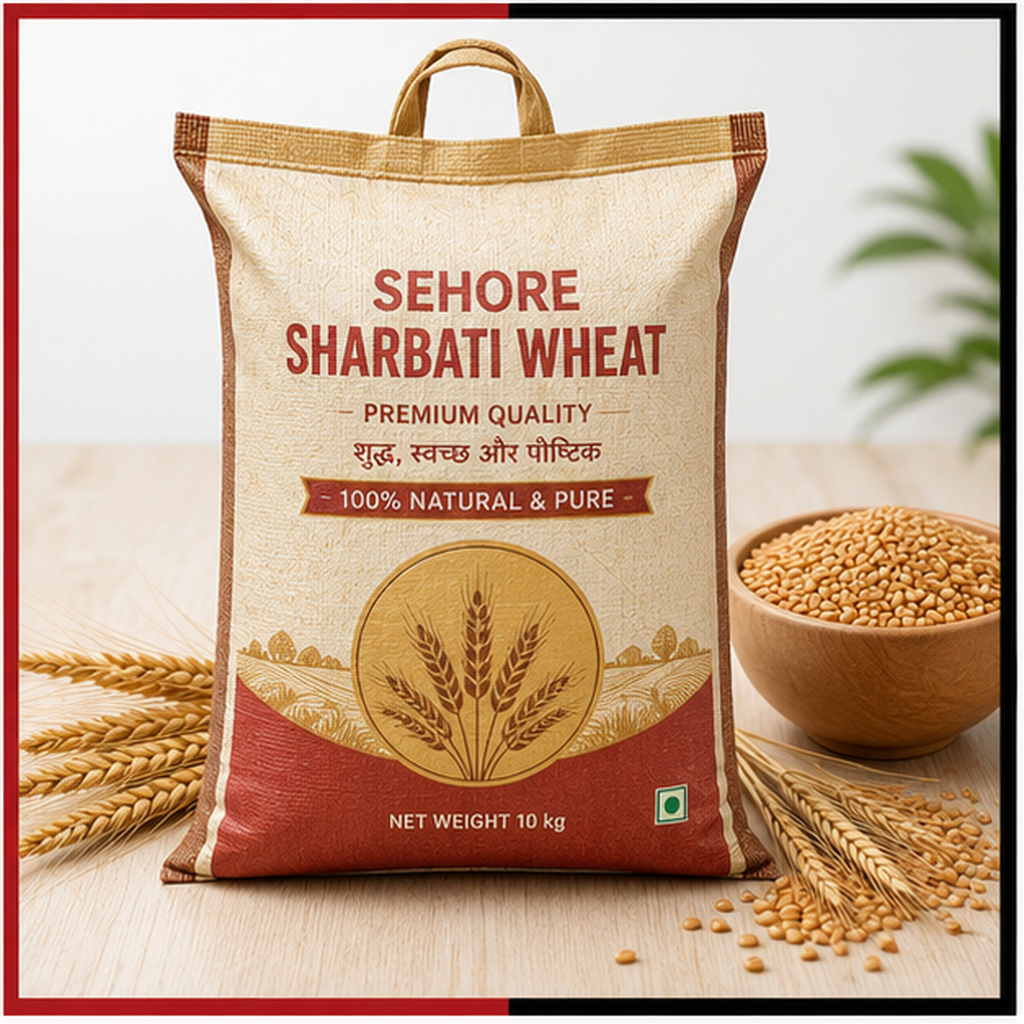
Direct answer: Sehore Wheat is important because it supports farmers, agricultural workers, grain traders, transporters, warehouses, flour mills, retailers and packaged-food businesses. In addition, premium Sharbati wheat gives the district a strong agricultural identity. As a result, it creates opportunities for value-added products such as atta, speciality wheat flour and other processed wheat foods.
Agricultural Importance
Wheat is one of Sehore’s major crops. The district’s soil conditions and farming ecosystem support substantial Sharbati wheat cultivation.
Farmer Income
Premium-quality wheat may receive stronger demand when it has good colour, cleanliness, grain uniformity and verified regional sourcing.
Milling and Processing
Wheat can be cleaned, graded and processed into:
- Whole-wheat atta
- Refined flour
- Semolina
- Broken wheat or dalia
- Bakery flour
- Bran
- Other cereal-based ingredients
Retail and Wholesale Demand
Sehore Sharbati Wheat is sold in household packets as well as larger quantities for retailers, restaurants, flour mills and institutional kitchens.
Regional Branding
The strong reputation of Sharbati wheat helps Sehore develop a clear identity in the agricultural and food-product market.
How Is Sehore Wheat Cultivated and Processed?
Direct answer: Sehore Wheat is generally cultivated during the Rabi season. The process includes soil preparation, seed selection, sowing, irrigation, nutrient and crop management, harvesting, threshing, drying, cleaning, grading and storage. Grain may then be supplied whole or processed into flour and other wheat products.
Step 1: Field Preparation
The field is prepared to create a suitable seedbed. Residues, weeds and uneven sections are managed before sowing.
Step 2: Seed Selection
Farmers select a suitable wheat variety according to soil conditions, irrigation availability, maturity period and target market.
When authentic Sharbati production or seed purity is important, farmers and buyers should maintain clear variety and source records.
Step 3: Sowing
Wheat is generally sown during the Rabi season. Timely sowing and suitable plant spacing can support crop establishment and grain development.
Step 4: Crop Management
Farmers manage:
- Irrigation
- Soil nutrients
- Weed growth
- Insect pests
- Plant diseases
- Field drainage
- Crop maturity
The exact schedule depends on local weather, soil, variety and available irrigation.
Step 5: Harvesting
The crop is harvested after the grains mature and dry sufficiently. Early harvesting can result in immature grain, while delayed harvesting may increase field losses.
Step 6: Threshing and Drying
Harvested wheat is threshed to separate the grain from straw. The grain must then be dried properly before storage.
ICAR’s Rabi advisory recommends storing wheat grain below 14% moisture for long-term storage and using improved grain-storage bags.
Step 7: Cleaning and Grading
The wheat is cleaned to remove:
- Stones
- Soil
- Straw
- Dust
- Weed seeds
- Insect-damaged kernels
- Other grains
- Broken material
FSSAI’s cereal standards state that foodgrains meant for grinding or processing should be clean and free from impurities and extraneous matter.
Step 8: Packing and Distribution
Clean wheat may be packed in retail bags, wholesale sacks or bulk containers. It is then supplied to households, traders, flour mills or food businesses.
Key Features of High-Quality Sehore Wheat
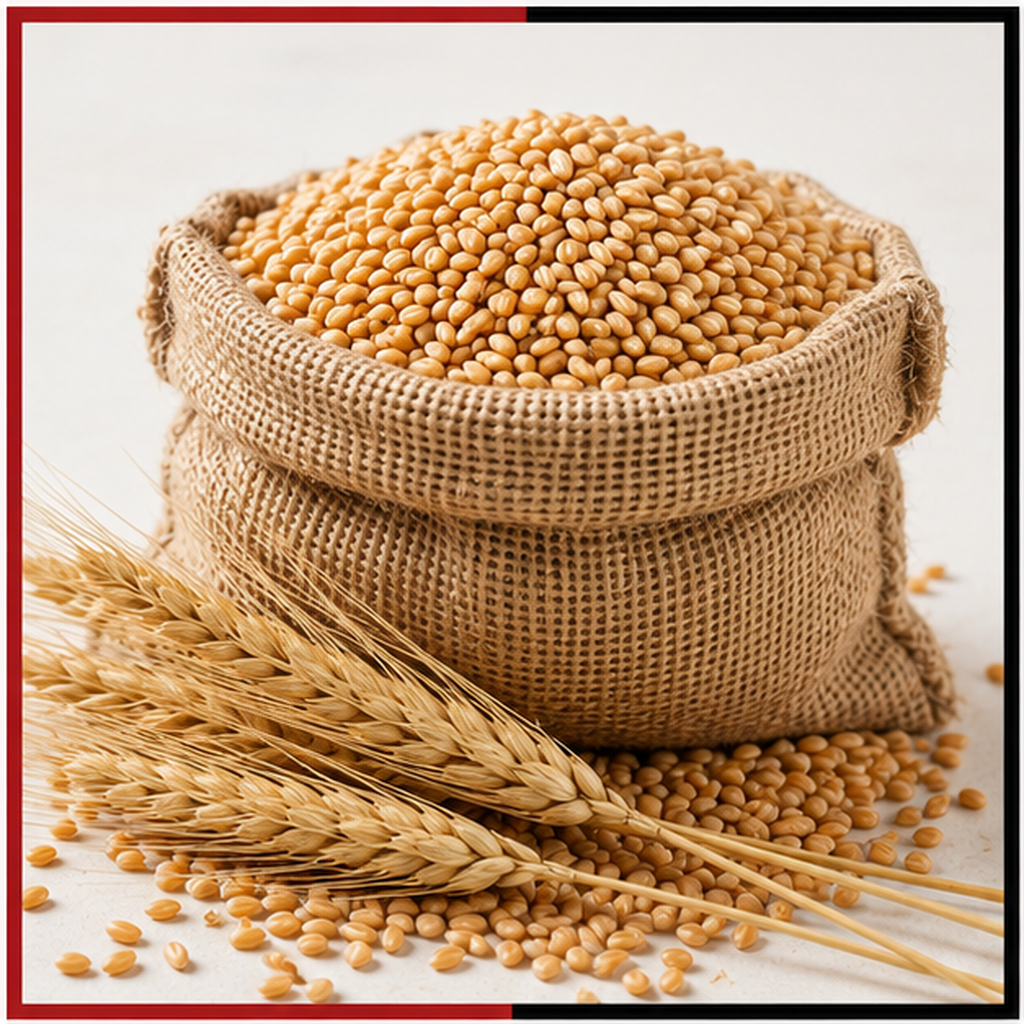
Clean and Uniform Grains
The wheat should have a reasonably consistent colour and grain size. A small amount of natural variation is normal.
Low Foreign Matter
The lot should contain minimal dust, stones, husk, straw and unrelated grains.
Proper Moisture
Dry grain stores better and reduces the risk of mould, heating and insect activity.
Natural Grain Smell
Fresh wheat should have a clean cereal-like smell. A musty, fermented or chemical odour may indicate poor storage or contamination.
Minimal Insect Damage
Check for holes, webbing, live insects, powdery residue or excessive broken kernels.
Good Milling Performance
Quality wheat should provide acceptable flour recovery and produce flour suitable for the buyer’s intended application.
Benefits of Choosing Sehore Sharbati Wheat
Premium Cooking Quality
Sharbati wheat is widely chosen for everyday chapatis and other Indian flatbreads because of its taste and texture.
Strong Regional Reputation
Sehore is officially recognised as an important production centre for Sharbati wheat.
Suitable for Household and Commercial Use
The wheat can serve homes, restaurants, flour mills, retailers and institutional food businesses.
Multiple Processing Options
It can be processed into atta, dalia, semolina, refined flour and other wheat-based products.
Bulk Procurement Potential
Sehore’s established production and trading ecosystem can support retail, wholesale and milling requirements.
GI-Linked Identity
The registration of Sharbati Gehu provides formal recognition to the product’s Madhya Pradesh origin, although individual sellers and products must still be verified.
Common Uses of Sehore Wheat
Sehore Wheat can be used in a variety of household and commercial food applications:
- Chapatis and rotis
- Parathas
- Pooris
- Whole-wheat bread
- Dalia
- Halwa
- Biscuits
- Bakery products
- Traditional sweets
- Restaurant meals
- Packaged atta
- Institutional kitchens
- Wheat-based food mixes
The required grain grade and flour texture may vary according to the final product.
Common Buying Mistakes
Buying Only by the Sharbati Name
Problem: A buyer assumes every product labelled Sharbati comes from Sehore or is GI-related.
Cause: Regional and variety terms are used without sufficient traceability.
Solution: Check the source, seller, batch and supporting documentation.
Selecting Wheat Only by Colour
Problem: Bright golden grain is treated as proof of quality.
Cause: Moisture, cleanliness, insects and storage are ignored.
Solution: Evaluate colour together with aroma, purity and a milling or cooking test.
Ignoring Moisture
Problem: Grain develops mould or storage insects.
Cause: Wheat is packed or stored with excessive moisture.
Solution: Check moisture before large purchases and long-term storage.
Inspecting Only the Top of the Bag
Problem: Dust and broken kernels remain hidden at the bottom.
Cause: The buyer checks only the visible upper layer.
Solution: Collect samples from several bags and different depths.
Buying in Bulk Without Testing
Problem: Flour quality does not match expectations.
Cause: No sample was milled or cooked before purchase.
Solution: Approve a representative sample before confirming a large order.
Ignoring Storage History
Problem: Old grain may have weak aroma, infestation or quality loss.
Cause: The crop year and warehouse conditions are not checked.
Solution: Ask about harvest, packing and storage dates.
How to Buy Sehore Wheat Safely
Direct answer: Buy Sehore Wheat by verifying its source, variety, crop year, moisture, cleanliness, grain condition and packaging. For bulk purchases, inspect a representative sample, conduct milling and cooking tests, and confirm all accepted quality limits in writing before finalising the order.
Follow these practical steps:
- Decide whether you need household, milling or food-processing wheat.
- Confirm whether the grain is Sharbati or another wheat variety.
- Ask for the farm, mandi or supplier source.
- Check the crop and packing year.
- Inspect colour and grain uniformity.
- Look for insects, stones and foreign matter.
- Smell the grain for mustiness.
- Check moisture before bulk storage.
- Mill and cook a sample.
- Record weight, grade, delivery and rejection terms.
Sehore Sharbati Wheat vs Regular Wheat
| Feature | Sehore Sharbati Wheat | Regular Commercial Wheat |
| Regional association | Strongly linked with Sehore | May come from different regions |
| Grain colour | Commonly golden or amber | Varies by variety |
| Taste | Often described as slightly sweet | Depends on variety |
| Market position | Premium household wheat | Standard household or industrial wheat |
| Main use | Atta and soft chapatis | Atta, bread, bakery or processing |
| Price | Often premium | Usually varies by grade |
| Traceability need | Important for authenticity | Important for quality and origin |
| Best suited for | Buyers prioritising taste and regional identity | General milling and food applications |
Regular wheat is not automatically lower quality. The right choice depends on the desired flour, product, price and processing performance.
Whole Wheat vs Packaged Atta
| Factor | Whole Wheat Grain | Packaged Wheat Atta |
| Inspection | Grain quality can be seen | Original grain is not visible |
| Milling | Requires grinding | Ready to use |
| Freshness control | Can be milled as needed | Depends on packing and storage |
| Convenience | Lower | Higher |
| Custom texture | Possible | Fixed by manufacturer |
| Best for | Buyers with flour-milling access | Daily convenient cooking |
Whole grain offers more control over visible purity. Packaged atta saves time but should come from a transparent and compliant processor.
Best Wheat Manufacturer and Supplier in Sehore
Sehore has wheat farmers, farmer-producer groups, grain traders, cleaning and grading units, flour mills, packers and wholesale suppliers, but no official authority ranks one business as the best wheat manufacturer or supplier. Buyers should compare source traceability, grain purity, moisture, milling performance, food-safety compliance, packaging, supply capacity, pricing and delivery history before choosing a supplier for household, retail, wholesale or processing requirements.
Best Practices for Wheat Buyers
- Buy wheat according to its final use.
- Verify Sharbati and regional-origin claims.
- Inspect samples from different bags.
- Check the crop year and storage period.
- Reject wheat with mould or abnormal odour.
- Confirm moisture and foreign-matter limits.
- Perform a flour and chapati test.
- Choose secure food-grade packaging.
- Store bags above the floor.
- Maintain supplier and batch records.
For export-oriented transactions, APEDA advises exporters to use appropriate testing and quality-control systems, and it maintains an advisory for quality wheat exports from India. Current export policy and documentation should be checked before entering an international contract.
How to Store Sehore Wheat
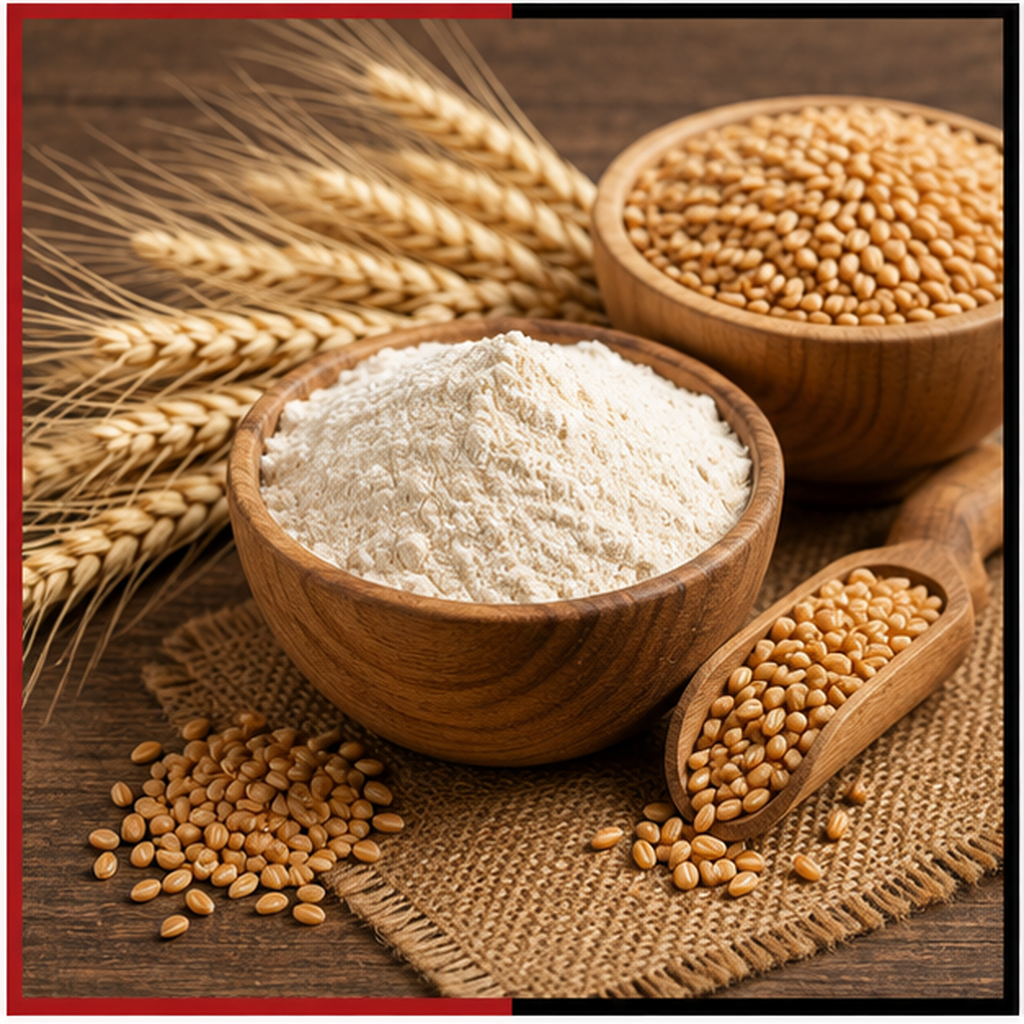
Direct answer: Store Sehore Wheat in a clean, cool, dry and ventilated location. Keep bags above the floor and away from walls, roof leakage and direct moisture. Regular inspection for insects, mould, heating and damaged packaging can help protect grain quality.
Storage Tips
- Use dry and clean bags or containers.
- Keep wheat on pallets.
- Do not place bags directly against damp walls.
- Avoid mixing new wheat with older stock.
- Follow first-in, first-out rotation.
- Check regularly for insects and webbing.
- Remove wet bags immediately.
- Keep the warehouse clean.
- Protect the grain from rodents.
- Grind only the required household quantity when practical.
Frequently Asked Questions
Sehore is famous for Sharbati Wheat, a premium variety known for its golden grains and slightly sweet taste. The district administration reports extensive cultivation and substantial annual production of Sharbati wheat in Sehore.
Yes. Sharbati Gehu is registered as a Geographical Indication for agricultural goods under Application Number 699. The registered geographical area is Madhya Pradesh, with applicants including a farmer-producer company based in Sehore.
Check the grain source, seller details, batch records and supporting traceability. Authenticity should not be judged by golden colour alone. Also inspect grain uniformity, aroma, moisture, foreign matter and cooking performance.
Sharbati wheat is widely preferred for chapatis because of its taste and cooking texture. Final softness also depends on flour milling, freshness, dough preparation, resting time and cooking technique.
Yes. Grain traders, farmer groups, flour mills and suppliers may offer it in bulk. Buyers should approve a representative sample and confirm the grade, moisture, packing, net weight and delivery conditions.
Key Takeaways
- Sehore is a recognised production centre for premium Sharbati wheat.
- Sharbati wheat is known for golden grains and a slightly sweet taste.
- Sharbati Gehu is registered as a GI for Madhya Pradesh.
- Regional identity alone does not guarantee every lot’s quality.
- Wheat should be checked for moisture, insects and foreign matter.
- Whole grain makes visible purity easier to inspect.
- Bulk buyers should complete milling and cooking tests.
- Secure, dry storage protects wheat quality.
- No supplier should be called the best without comparing actual performance.
Final Verdict
Sehore Wheat, particularly the Sharbati variety, is a strong choice for households, retailers, flour mills and food businesses seeking premium wheat with a recognised regional identity.
Its golden appearance and cooking reputation make it desirable, but buyers should not rely only on the product name. Source verification, moisture testing, cleanliness and actual flour performance remain essential.
For household use, choose clean and recently packed grain from a reliable supplier. For bulk purchases, approve a representative sample and document all accepted quality conditions.
Conclusion
Sehore Wheat represents one of Madhya Pradesh’s best-known agricultural products. The district’s strong association with Sharbati wheat, suitable soil and established farming ecosystem have helped the grain build a premium market identity.
Buyers looking for Sehore Sharbati Wheat should verify the source, inspect grain quality and check moisture, cleanliness and storage history. Commercial purchasers should also perform milling and cooking trials before confirming large orders.
Careful selection, secure packaging and proper storage can help preserve the wheat’s flavour, appearance and processing value.
| Manufacturers | Contact / Address |
| MP Sharbati Wheat | CALL NOW |
| MP AGRO TECH | CALL NOW |
| Jatayu Traders | CALL NOW |
| Sathvik Agro Food Industries Pvt. Ltd. | CALL NOW |
| Shree Shivay Food & Flour Mill (OPC) Pvt. Ltd. | CALL NOW |
| Shree Ram Agro Industries | VISIT NOW |
| Uday Super Market And Lodhi Flour Mill | VISIT NOW |
| Gattu Atta Chakki | VISIT NOW |
| Vishal Flour Mill | VISIT NOW |
Leave a Reply