Natural stone can significantly improve both the appearance and durability of a building. Among the many stone varieties available in India, Chhatarpur Granite Stone stands out because it offers natural strength, rich colour patterns and suitability for residential, commercial and architectural projects.
Moreover, Chhatarpur district in Madhya Pradesh contains naturally occurring granite resources. The Indian Bureau of Mines includes Chhatarpur among the state’s granite-bearing districts. In addition, a Government of India industrial profile identifies granite cutting and polishing as a promising area for new local enterprises. As a result, quarry operators, stone processors, fabricators and construction suppliers can create new business opportunities across the district.
Overall, this guide explains the main features, types, finishes, applications, benefits and limitations of granite stone from Chhatarpur. Furthermore, it helps buyers inspect slabs, compare quality and select a suitable supplier instead of relying only on price.
What Is Chhatarpur Granite Stone?
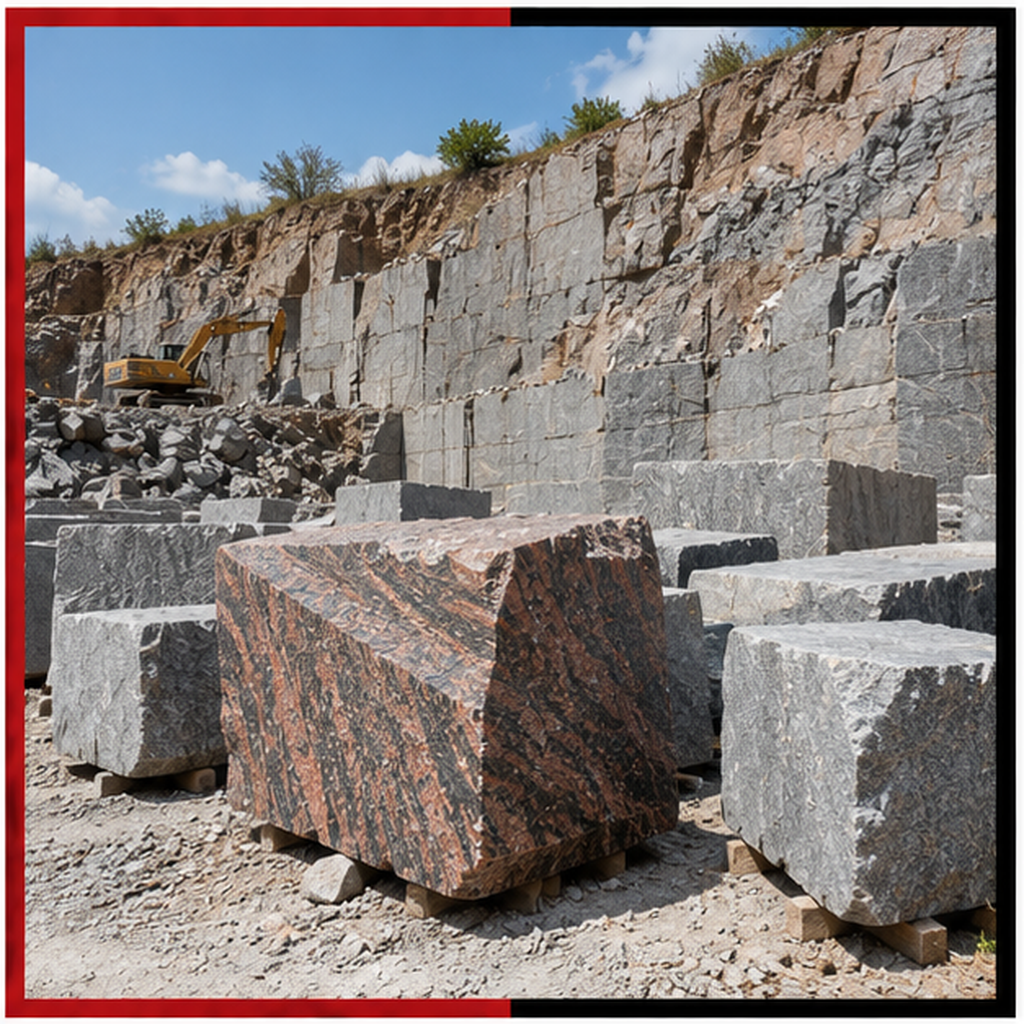
Direct answer: Chhatarpur Granite Stone refers to natural dimensional stone that quarry operators extract from granite-bearing areas in and around Chhatarpur district, Madhya Pradesh. After extraction, processors convert the stone into blocks, slabs, tiles and customised pieces. Consequently, builders and designers use it for flooring, wall cladding, countertops, staircases, monuments and exterior construction.
Granite develops naturally as a hard rock with visible mineral grains. However, the mineral composition and quarry location determine its exact colour, texture and pattern.
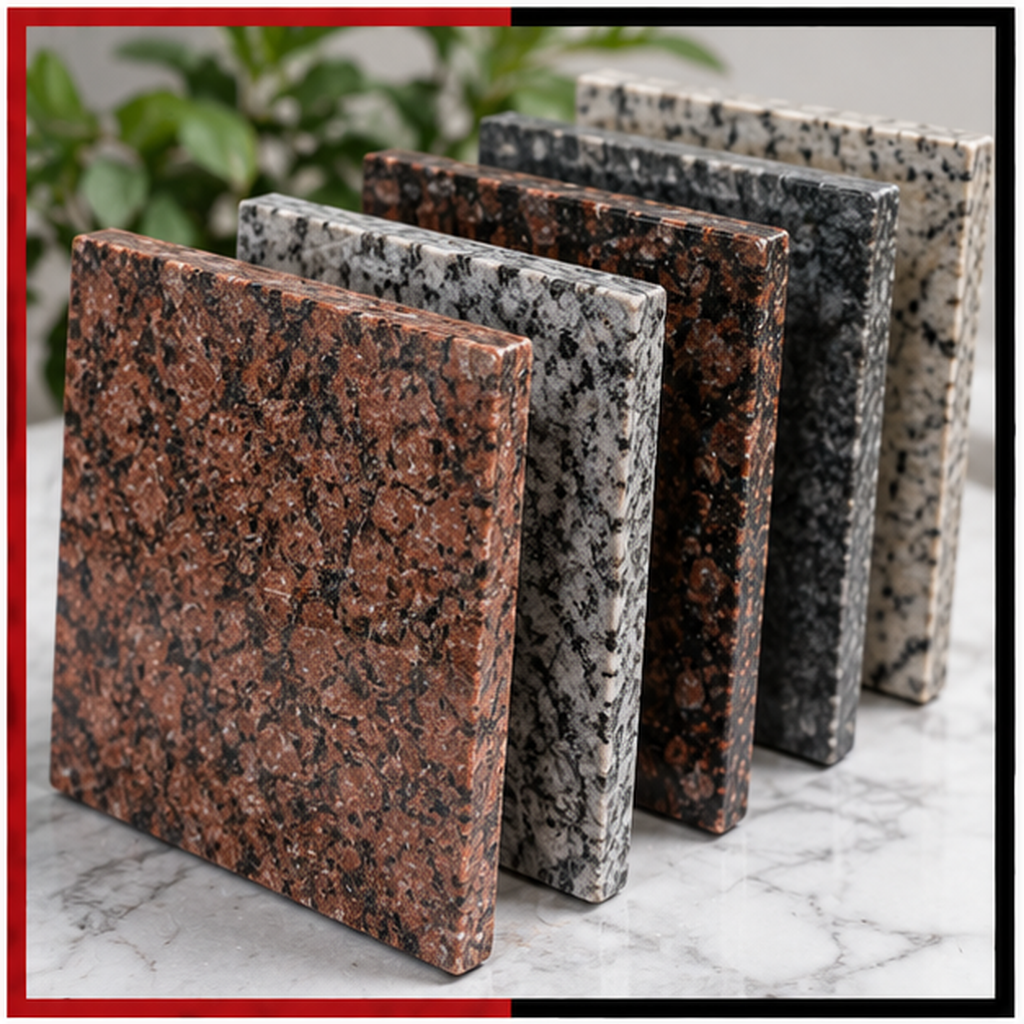
In particular, granite from the Chhatarpur region often displays reddish, pink, grey and dark mineral patterns. Nevertheless, each natural block may show slight variations in shade, grain and veining. Therefore, buyers should inspect actual slab samples before approving a large order.
Common commercial forms include:
- Rough granite blocks
- Unpolished slabs
- Polished granite slabs
- Granite flooring tiles
- Cut-to-size stone
- Staircase treads
- Countertop pieces
- Wall-cladding panels
- Kerbs and paving stone
- Monumental stone
Why Is Chhatarpur Granite Important?
Direct answer: Chhatarpur Granite supports mining, stone cutting, polishing, transportation, construction and several related small businesses. Moreover, builders choose it for its strength and decorative appearance. At the same time, local processors increase its value by cutting, finishing and packaging the stone for domestic and international buyers.
The Indian Bureau of Mines records granite deposits in Chhatarpur. In addition, the district’s industrial profile lists granite among its important mineral resources. Furthermore, the profile highlights granite cutting and polishing as promising MSME activities. As a result, the sector generates business and employment opportunities throughout the district.
Construction Value
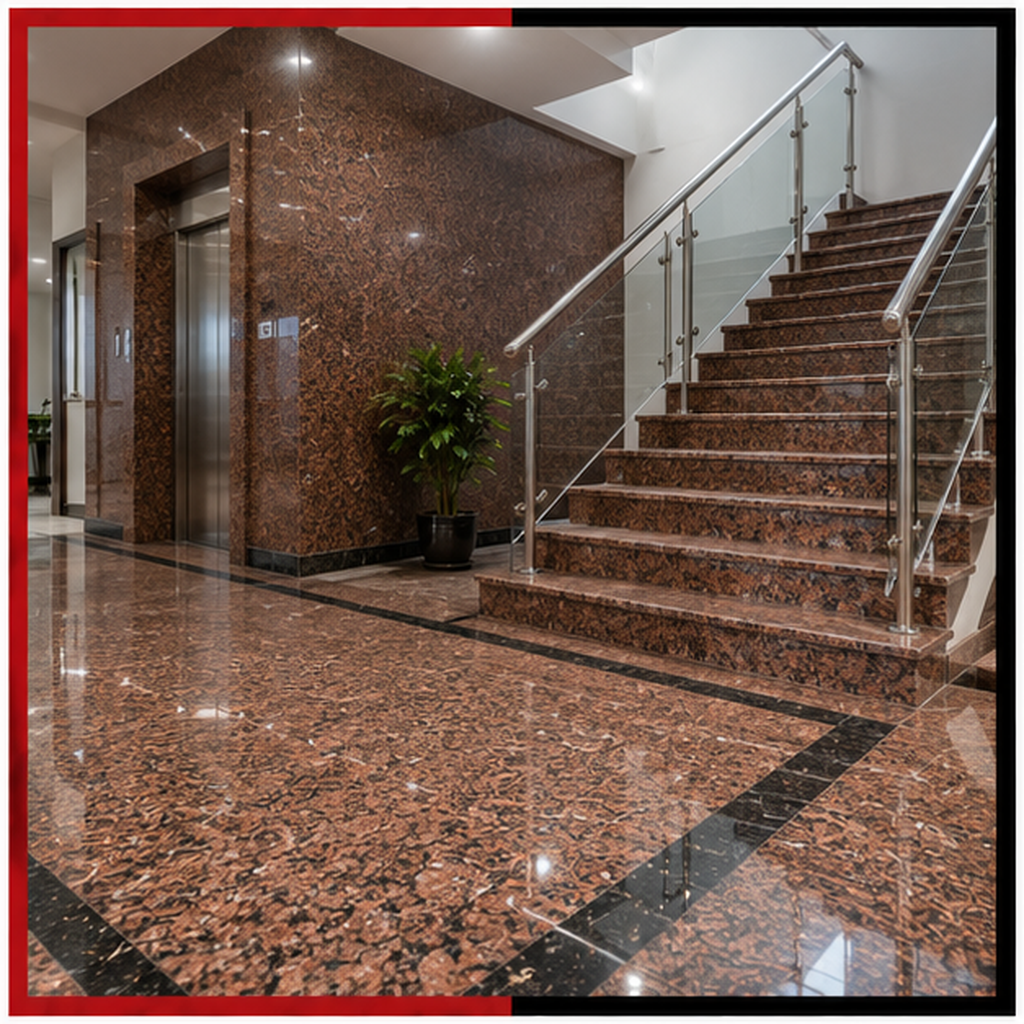
Granite handles regular use when buyers choose the correct grade, thickness and finish. Therefore, builders install it on floors, staircases, walls and outdoor surfaces. However, skilled installation and proper maintenance also determine its long-term performance.
Commercial Value
Processors increase the value of raw granite by cutting, calibrating, polishing and finishing its edges. Moreover, suppliers protect the finished stone with secure packaging during transportation. Consequently, buyers often prefer processed slabs and tiles over untreated stone blocks.
Employment Potential
The granite supply chain provides work for quarry workers, machine operators, polishers, fabricators, loaders, drivers, dealers and installation professionals. In addition, local transport, packaging, equipment-repair and maintenance businesses benefit from granite-related activities.
Design Value
Every granite slab shows a naturally formed mineral pattern. Therefore, architects, designers and homeowners use it to give homes, hotels, offices and public buildings a distinctive appearance. Furthermore, natural variations in colour, grain and pattern make each installation visually unique.
Main Features of Chhatarpur Granite Stone
Natural Colour and Pattern
Natural granite contains visible grains, lines, speckles and colour variations. In particular, red granite from the Chhatarpur region may feature combinations of red, pink, black, grey and darker mineral markings.
However, buyers should not automatically treat these variations as defects. Instead, they should recognise them as part of the stone’s natural character. Therefore, buyers should inspect several full slabs and approve an acceptable colour and pattern range before placing a large order.
High Strength
Granite is widely chosen for areas that require a strong stone surface. However, performance depends on stone quality, thickness, installation and maintenance.
Polished Appearance
A polished finish highlights the colour and mineral pattern of the stone. It is commonly selected for indoor floors, countertops and decorative wall panels.
Multiple Finish Options
Chhatarpur Granite Stone can be processed into different surface finishes depending on the project.
Common options include:
- Polished finish
- Honed finish
- Flamed finish
- Sandblasted finish
- Leather finish
- Bush-hammered finish
- Natural or rough finish
Long Service Life
Properly selected and installed granite can provide a long-lasting surface. Poor installation, weak bedding or unsuitable thickness can still lead to cracks or movement.
How Is Chhatarpur Granite Stone Processed?
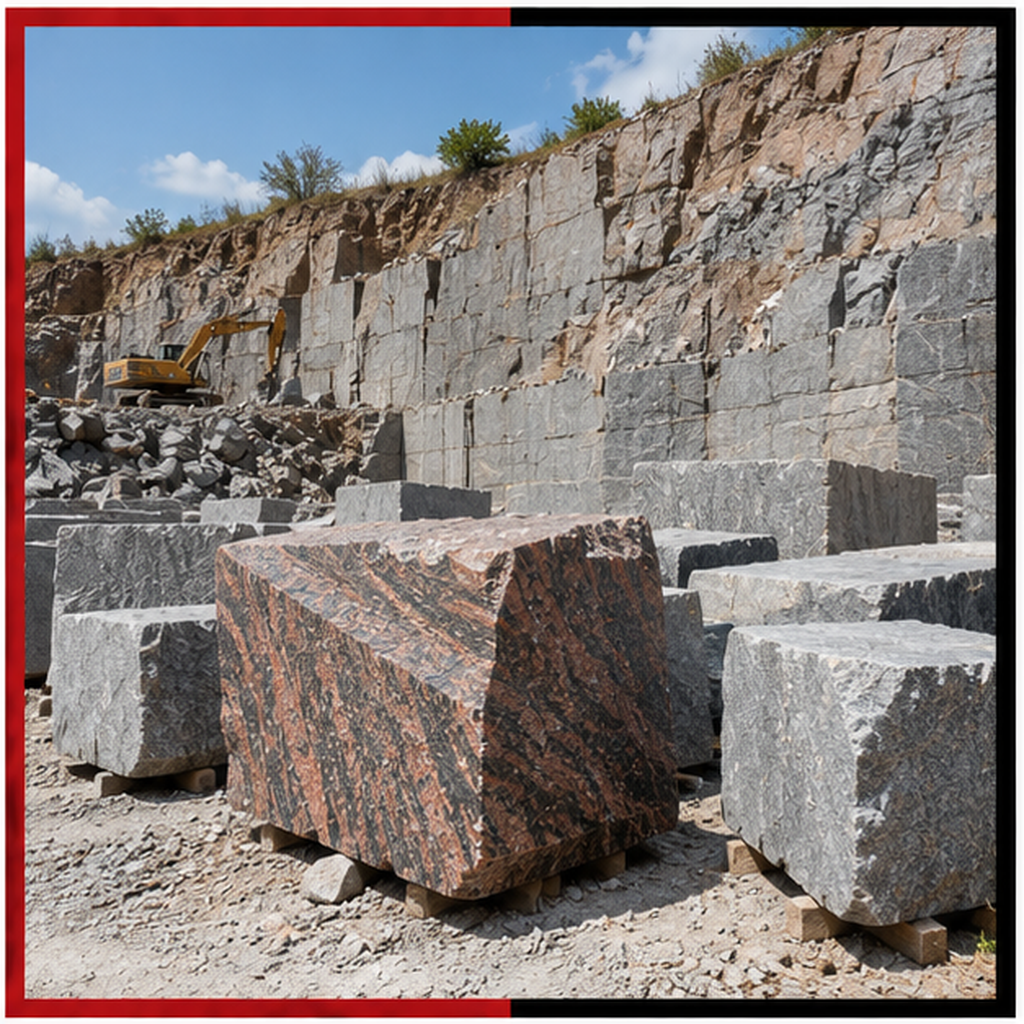
answer: Granite processing usually begins with quarrying large stone blocks. The blocks are transported to a processing unit, cut into slabs or tiles, levelled, polished and inspected. Finished pieces are then measured, packed and transported according to the buyer’s project requirements.
Step 1: Quarry Selection
The stone deposit is studied to understand its colour, pattern, cracks and block-forming potential.
Different areas of the same quarry may produce visible colour variations.
Step 2: Block Extraction
Large blocks are separated from the rock mass using suitable mining and cutting equipment.
Careful extraction is important because uncontrolled cracks can reduce the usable portion of a block.
Step 3: Block Inspection
Blocks are checked for:
- Major cracks
- Colour consistency
- Size
- Mineral pattern
- Weathered areas
- Structural weakness
Step 4: Slab Cutting
The blocks are cut into slabs of the required thickness using stone-processing machinery.
The thickness must match the intended application and order specifications.
Step 5: Surface Finishing
Slabs are polished, honed, flamed or textured depending on their final use.
Indoor decorative surfaces often use polishing, while outdoor spaces may require a less slippery textured finish.
Step 6: Cutting and Edge Finishing
Slabs may be cut into tiles, countertops, stairs, skirting or customised pieces.
Edges can be straight, bevelled, rounded or shaped according to the design.
Step 7: Inspection and Packing
The finished stone is checked for size, thickness, finish, visible cracks and shade variation.
It is then packed with suitable separators and supports to reduce damage during transportation.
Popular Uses of Chhatarpur Granite Stone
Flooring
Granite flooring is used in homes, hotels, offices, shops and public buildings.
Buyers should select the finish carefully. A highly polished surface may become slippery in wet areas.
Kitchen Countertops
Granite is popular for kitchen counters because it provides a solid and attractive working surface.
The slab should be properly supported, sealed where necessary and installed by an experienced fabricator.
Staircases
Granite can be used for stair treads, risers, landings and skirting.
For safer use, the surface and edge design should provide adequate grip.
Wall Cladding
Thin granite panels may be used on interior feature walls, pillars, building entrances and exterior elevations.
The fixing method should be selected according to panel size, height and building conditions.
Monuments and Memorials
Red and dark granite varieties are often considered for memorial stones, nameplates, plaques and monuments because of their formal appearance.
Outdoor Landscaping
Textured granite may be used for:
- Pathways
- Garden steps
- Paving
- Kerbs
- Public spaces
- Boundary features
- Building facades
Benefits of Chhatarpur Granite Stone
Attractive Natural Appearance
Each granite slab has a naturally formed design. This gives projects more visual character than a printed imitation.
Suitable for Several Applications
The same stone category can be processed for floors, stairs, walls, counters and decorative products.
Availability of Custom Sizes
Granite blocks and slabs can be cut according to project measurements, subject to block size and processing capability.
Resistance to Regular Wear
Good-quality granite is suitable for many high-use spaces when it is properly installed and maintained.
Value Addition Through Processing
Cutting, polishing and edge finishing can convert raw stone into higher-value construction products.
Regional Sourcing
Buyers seeking Madhya Pradesh granite can source material from businesses working with Chhatarpur-area stone resources.
Challenges and Common Buying Mistakes
Selecting Granite Only by Colour
Problem: Buyers choose a slab because its colour looks attractive.
Cause: Structural quality, cracks and thickness are ignored.
Solution: Inspect both appearance and physical condition before purchasing.
Expecting Every Slab to Look Identical
Problem: Natural colour variation is treated as a manufacturing error.
Cause: Buyers expect granite to look like printed ceramic tiles.
Solution: Approve a representative slab range rather than only one small sample.
Ignoring Thickness Variation
Problem: Uneven slabs can make installation difficult.
Cause: Thickness and calibration are not included in the order specification.
Solution: Mention the required thickness and acceptable tolerance in writing.
Choosing the Wrong Finish
Problem: A polished surface becomes slippery outdoors.
Cause: The finish is selected for appearance without considering the location.
Solution: Use suitable anti-slip or textured finishes in wet and exterior areas.
Purchasing Without Checking Cracks
Problem: A slab may break during cutting or installation.
Cause: Natural fissures and repaired cracks are not inspected.
Solution: Check slabs in good lighting and ask about repairs or resin treatment.
Comparing Only the Lowest Price
Problem: Cheap material creates higher installation waste.
Cause: Buyers ignore usable slab area, finishing and consistency.
Solution: Compare final usable quality instead of only the price per square foot.
Best Practices for Buying Chhatarpur Granite Stone
- Define the exact application before selecting the stone.
- Request full-slab photographs instead of small edited samples.
- Inspect the stone under natural and indoor lighting.
- Confirm slab length, width and thickness.
- Check for cracks, patches, holes and edge damage.
- Approve the acceptable colour and pattern range.
- Select the correct finish for indoor or outdoor use.
- Ask whether the slab has been resin-treated or repaired.
- Confirm cutting, polishing, loading and transport costs.
- Purchase extra material for cutting waste and future repairs.
Chhatarpur Granite vs Artificial Stone
| Feature | Chhatarpur Natural Granite | Artificial Engineered Stone |
| Origin | Naturally quarried stone | Manufactured material |
| Pattern | Naturally varied | More controlled and uniform |
| Slab consistency | May vary from slab to slab | Usually more consistent |
| Surface options | Polished, honed and textured | Depends on the product |
| Outdoor suitability | Suitable with correct selection | Varies by manufacturer |
| Repair matching | Exact future match may be difficult | Repeat patterns may be available |
| Best suited for | Natural-stone projects | Uniform modern interiors |
| Buyer inspection | Full slabs should be checked | Product specifications should be checked |
Neither material is automatically better for every project. Natural granite suits buyers who value unique patterns and stone character. Engineered products may suit projects requiring high visual consistency.
Chhatarpur Granite vs Marble
| Factor | Granite | Marble |
| Appearance | Granular and speckled | Veined and flowing |
| General hardness | Usually harder | Generally softer |
| Scratch sensitivity | Usually lower | Usually higher |
| Common uses | Floors, counters and exteriors | Floors, walls and decorative interiors |
| Maintenance | Moderate | Often requires more careful maintenance |
| Pattern consistency | Naturally variable | Naturally variable |
| Finish options | Wide range | Wide range |
The correct choice depends on design, location, budget and maintenance expectations.
Best Granite Manufacturer in Chhatarpur
Best Granite Manufacturer in Chhatarpur
Chhatarpur has several granite quarry operators, processors, fabricators and stone suppliers. However, no official authority ranks any single company as the best granite manufacturer. Therefore, buyers should compare actual slab samples, quarry sources, stone consistency, cutting accuracy, polishing quality, production capacity, packaging, pricing and delivery history before choosing a manufacturer for residential, commercial, wholesale or export requirements.
How to Check Granite Quality Before Buying
Direct answer: Buyers should check granite quality by viewing the complete slab, measuring its thickness and inspecting the surface for deep cracks, loose mineral areas, poor polishing, stains and edge damage. In addition, they should compare several slabs from the same lot because natural variations can affect colour and pattern.
Moreover, buyers should examine the stone under proper lighting and check the finish from different angles. As a result, they can identify repaired cracks, uneven polish and shade differences before approving the material. Finally, buyers should record the approved slab numbers and inspect the stone again before loading.
Use the following checklist:
- View the slab from different angles.
- Run a hand over the polished surface.
- Check whether the polish looks even.
- Inspect the slab against strong light.
- Look closely at repaired cracks.
- Measure the thickness at several points.
- Compare all slabs selected for one room.
- Confirm the final cut sizes.
- Inspect the stone before loading.
- Record the approved slab numbers where possible.
Installation and Maintenance Tips
Use an Experienced Installer
Incorrect support or uneven bedding may cause cracking, hollow areas and poor alignment.
Match the Slabs Before Installation
Arrange adjoining slabs before fixing them so the colour and pattern flow naturally.
Use Suitable Adhesive or Mortar
The installation system should match the slab size, base surface and site conditions.
Protect the Finished Surface
Cover installed stone while other construction work continues.
Clean Spills Promptly
Do not allow strongly coloured, acidic or oily substances to remain on the surface for long periods.
Avoid Harsh Cleaning Chemicals
Use products recommended for natural stone. Highly acidic cleaners may damage the finish or surrounding grout.
Consider Sealing
Some granite surfaces may benefit from a suitable penetrating sealer, especially in kitchens or stain-prone areas.
Frequently Asked Questions
Chhatarpur Granite Stone refers to natural granite that quarry operators extract from granite-bearing areas of Chhatarpur district in Madhya Pradesh. After extraction, stone processors cut and finish the granite into blocks, slabs, tiles and customised pieces. As a result, builders and designers use it for flooring, countertops, staircases, wall cladding, monuments and outdoor construction projects..
Chhatarpur granite often features red and pink tones with black, grey and darker mineral patterns. However, quarry location, mining bench and individual block can influence the stone’s natural appearance. Therefore, buyers should inspect actual slabs and compare their colour, grain and pattern before placing an order.
Yes, builders can use suitable granite for both residential and commercial flooring. Therefore, buyers should choose the correct thickness and surface finish for the intended location. For example, polished granite works well in indoor spaces, while textured or anti-slip finishes provide better safety in outdoor and wet areas.
Yes, fabricators can shape granite slabs into kitchen countertops. Therefore, buyers should choose a structurally sound slab and ensure that an experienced installer provides proper support. In addition, they should ask whether the specific stone and finish require sealing. As a result, the countertop can resist stains, moisture and everyday wear more effectively.
Good-quality granite should have an even finish, suitable thickness and no serious structural cracks. Natural colour and grain variation are normal. Inspect the whole slab, not just a small sample, and compare all pieces required for the project.
Granite generally requires routine cleaning with a soft cloth and natural-stone-compatible cleaner. Some surfaces may require periodic sealing. Avoid harsh acids, abrasive tools and prolonged exposure to strongly staining substances.
Key Takeaways
- Chhatarpur is recognised as a granite-bearing district in Madhya Pradesh.
- Chhatarpur Granite Stone is used for floors, counters, stairs and cladding.
- Red and pink colour combinations are commonly associated with the region.
- Natural shade and mineral variations are expected.
- Full slabs should be inspected before purchase.
- Thickness, finish and structural condition matter more than colour alone.
- Textured finishes are generally safer for wet outdoor areas.
- Buyers should define all quality requirements in writing.
- No manufacturer should be ranked as the best without comparing samples and performance.
Final Verdict
Chhatarpur Granite Stone can be a strong and visually distinctive choice for residential, commercial and architectural projects. Its natural colour variation makes every installation unique, while different processing options allow it to be used for floors, counters, stairs, walls and exterior applications.
However, regional origin alone does not guarantee perfect quality. Every order should be evaluated according to cracks, thickness, finish, colour variation and usable slab area.
For the best result, inspect the actual material, approve a slab range and work with experienced processors and installers.
Conclusion
Chhatarpur Granite Stone represents an important natural stone resource from Madhya Pradesh. Its durability, rich mineral appearance and processing flexibility make it suitable for a wide range of construction and design projects.
Buyers should select granite according to the final application rather than appearance alone. Checking the full slab, thickness, surface finish, repairs and supplier performance can prevent costly mistakes.
Whether you need Chhatarpur Red Granite for flooring, countertops, monuments or bulk construction, written specifications and proper inspection will help you receive consistent and usable material.
Leave a Reply