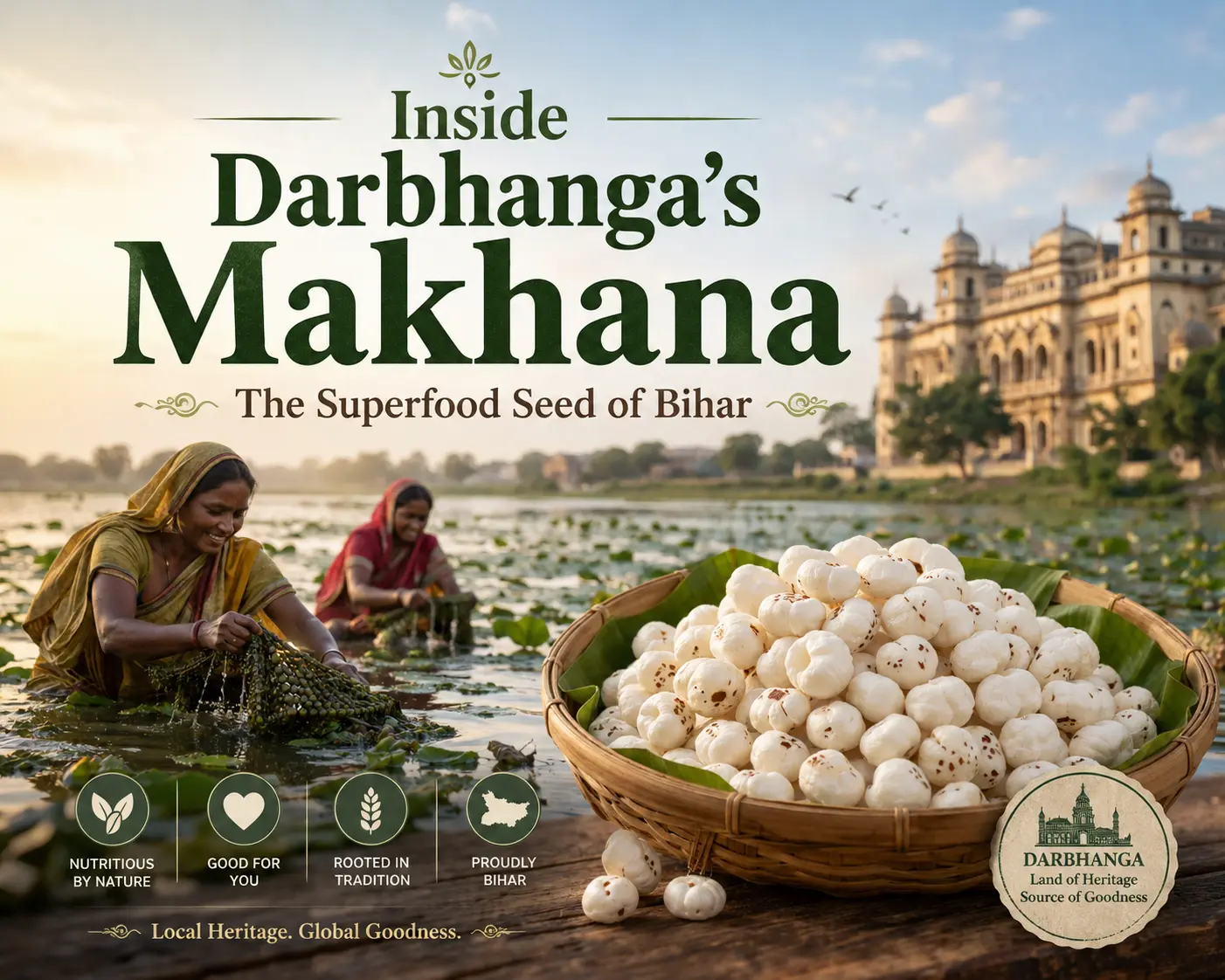
Inside Darbhanga's Makhana: The Superfood Seed of Bihar
Darbhanga’s Makhana, popularly known as fox nuts or lotus seeds, is one of Bihar’s most treasured agricultural gifts. What began as a humble wetland harvest, gathered by local Mallah communities from muddy ponds, is today shaping health-conscious diets, festive rituals, and premium snacking trends. With rising global appreciation for natural, protein-rich superfoods, consumers are choosing hand-harvested Makhana over processed alternatives, creating fresh opportunities for farmers and food entrepreneurs alike.

The Heritage of Darbhanga's Makhana
Darbhanga’s Makhana, popularly known as fox nuts or lotus seeds, is one of Bihar’s most treasured agricultural gifts. What began as a humble wetland harvest, gathered by local Mallah communities from muddy ponds, is today shaping health-conscious diets, festive rituals, and premium snacking trends. With rising global appreciation for natural, protein-rich superfoods, consumers are choosing hand-harvested Makhana over processed alternatives, creating fresh opportunities for farmers and food entrepreneurs alike.
Makhana cultivation in the Mithila region, centered around Darbhanga, dates back generations, deeply woven into local tradition and diet. The aquatic plant, Euryale ferox, grows naturally in the ponds and wetlands of North Bihar, where the region’s unique soil and water conditions make it ideally suited for cultivation. Beyond its culinary role, Makhana holds ritual significance—used in fasting foods, festive sweets, and religious offerings—making it a living tradition rather than just a crop.
The Harvesting and Grading of Makhana
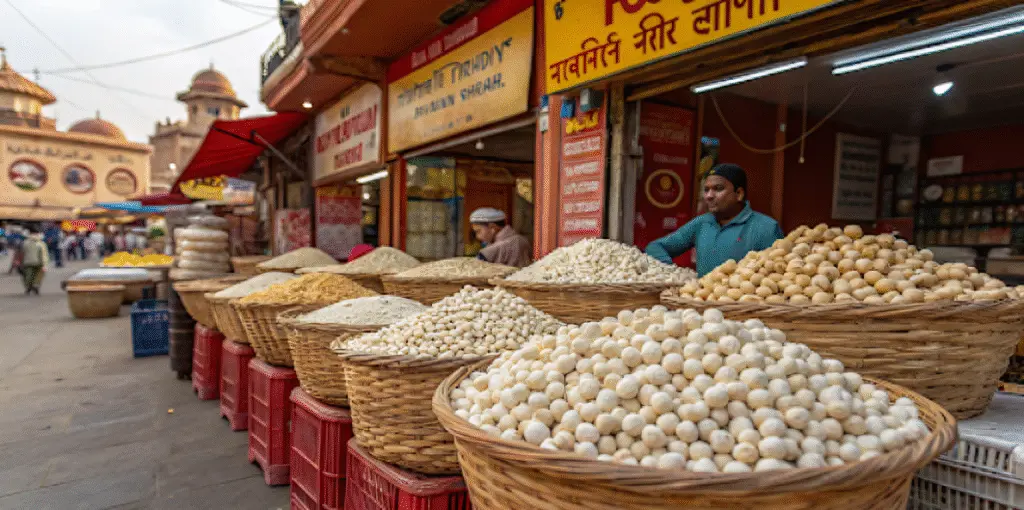
Makhana is famous for the way it is harvested. This is a hard process. Farmers have to dive into ponds to pick the seed pods with spikes. They do this by hand. After that the seeds are dried in the sun, roasted and then popped by hand. People have been doing this for a time and they pass these methods down to their families. The people who process Makhana are very skilled. They sort the seeds that have been popped into sizes and colors. The biggest and whitest seeds are the expensive. Now some places use machines to roast the seeds. They still sort them by hand. Some people still do everything by hand.
How Makhana Is Made
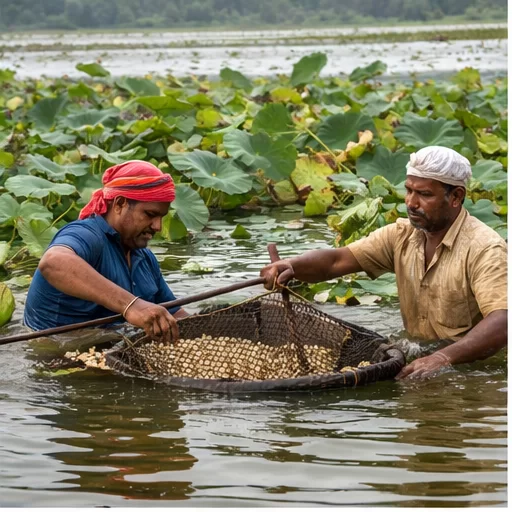
To make Makhana we first need to pick the seed pods that’re ready. We find them at the bottom of ponds. The water is usually up to our waist. Then we dry the seeds in the sun. After that we roast them in pans. This takes a lot of time. We have to be very careful. We have to make sure we do not burn the seeds. When the seeds are roasted we hit them so they pop open. Inside there is an fluffy kernel. The person roasting the seeds has to be very good at their job. If they are not the Makhana will not be good. That is why Makhana that is made well is very special and valuable.
Demand, in Domestic & International Markets
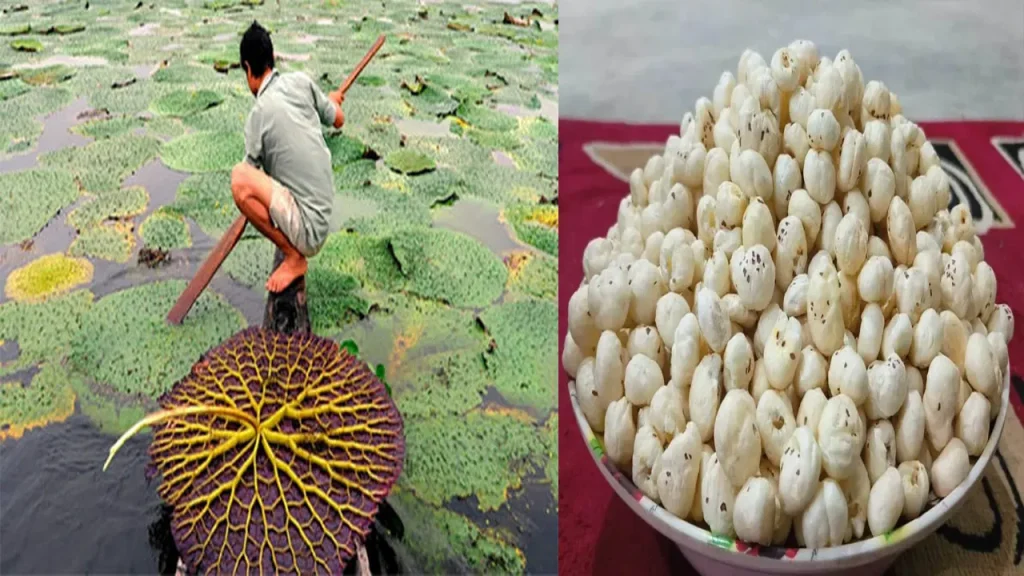
People like Makhana now because it is a healthy snack that is gluten-free and low in calories. They like to eat it roasted or use it to make dishes like kheer. Many countries like the USA, UK and some parts of Europe like Makhana. They like to buy flavored Makhana and use it in food.
As more people want to eat natural food Makhana is becoming more popular.

Business Potential for Small Entrepreneurs
Makhana is a business for small entrepreneurs who want to start a business with a small amount of money. There are people who grow Makhana in Darbhanga and they can supply it to these businesses. These businesses can start by making roasted and flavored Makhana snacks. Then make more products like gift packs and healthy food mixes. They can also sell their products to countries. Some businesses even make products for companies to give as gifts or, for people who want to buy healthy food directly from them. The government also helps Makhana businesses by giving them recognition and schemes.
Conclusion
Darbhanga Makhana is a thing that brings together old traditions, good nutrition and a modern way of being healthy. It started as a thing that people picked from ponds but now it is loved all around the world as a superfood. People like to eat Makhana during festivals in a dish called kheer and they also like to snack on it every day because it is healthy. Makhana is good for people who like traditions and want to live in a way that is good for the earth. The future of Makhana looks very good because more and more people want to buy it. There are many ways to sell it online.

Leave a Reply