
Kannauj: The Perfume City of India

The town of Kannauj is in Uttar Pradesh. It is a town but the town of Kannauj is very famous. The town of Kannauj is known as the Perfume Capital of India. People have been making perfume in the town of Kannauj for a long time. The perfume is called ittar. The ittar is natural. It does not have alcohol in it. People in the town of Kannauj make the ittar using methods. They use ways to make the attar that have been around for centuries. The town of Kannauj is still making the ittar the way.The town of Kannauj is in Uttar Pradesh. It is a town but the town of Kannauj is very famous. The town of Kannauj is known as the Perfume Capital of India. People have been making perfume in the town of Kannauj for a long time. The perfume is called ittar. The ittar is natural. It does not have alcohol in it. People in the town of Kannauj make the ittar using methods. They use ways to make the attar that have been around for centuries. The town of Kannauj is still making the ittar the way.
What is Attar?
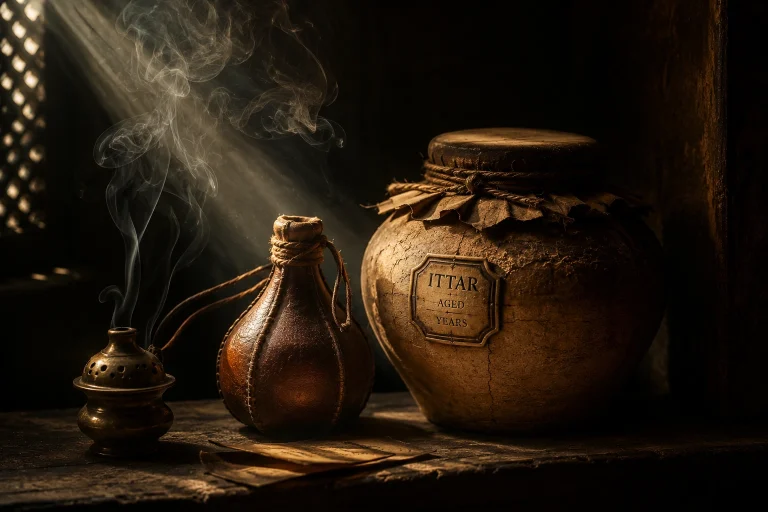
Attar is a fragrance that comes from flowers and things like herbs and spices and woods. They get attar by using a way of steaming these things slowly which is called deg-bhapka. Attar is really different from the perfumes you buy today because those are made with stuff and alcohol. Attar is one hundred percent natural. It lasts a long time, which is why people who love fragrances really like attar.
Why Kannauj?

Kannauj has an old tradition of making perfume that is over 400 years old. This tradition has been passed down from one generation to the next by skilled people who make perfume. The weather in Kannauj and the quality of the water and the flowers that grow in Kannauj like rose and jasmine and kewda are just right for making perfume, especially the kind called ittar.
There are still a lot of distilleries in Kannauj that are run by families and they make ittar using old copper vessels just like people used to do a long time ago. Kannauj ittar is very famous. People still make ittar in Kannauj today.
Popular Varieties
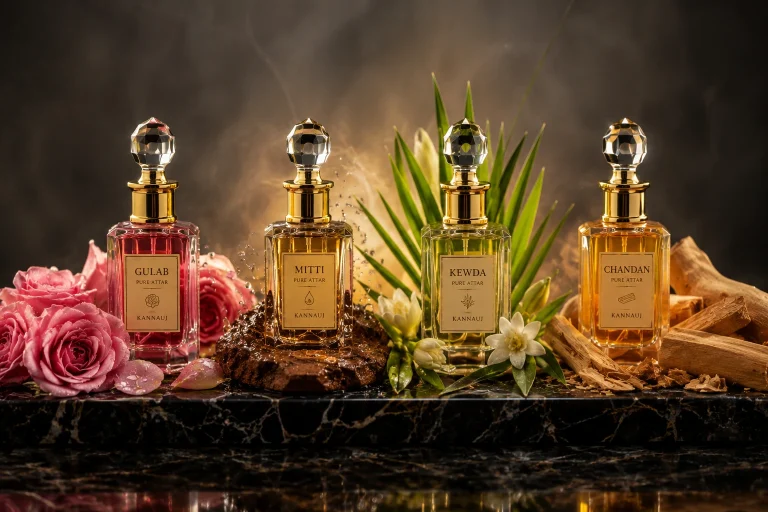
Gulab (Rose) Attar – floral and soothing
Mitti Attar – captures the earthy smell of rain-soaked soil
Kewda Attar – sweet and tropical
Chandan (Sandalwood) Attar – woody and calming
A Glimpse into History
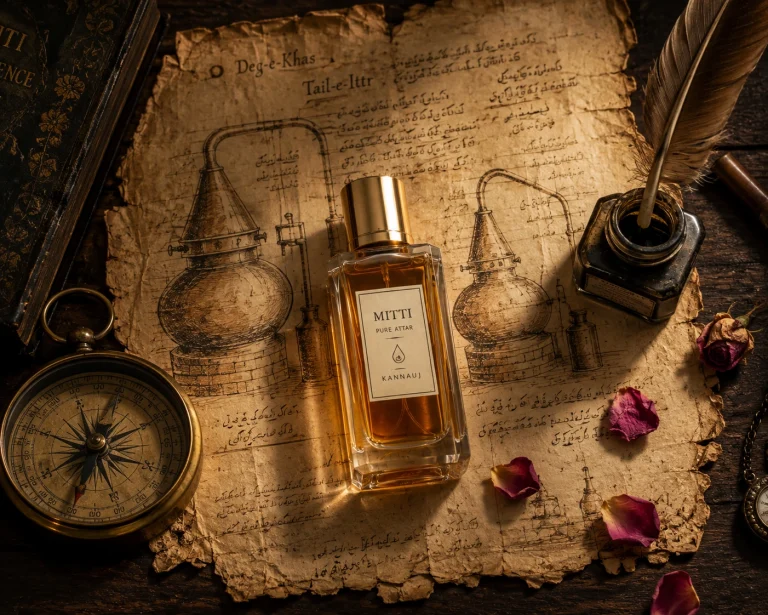
Kannauj has a history with making perfumes that goes back a very long time. You can find things about making fragrances in books and stories from travelers.
The town of Kannauj was a place for trade on old routes. People from the Middle East and Europe bought the attar from Kannauj.
Families in Kannauj made perfumes for years and they kept getting better at it. They did not tell anyone outside their family how to make the perfumes they only told their sons.
How Ittar is Made
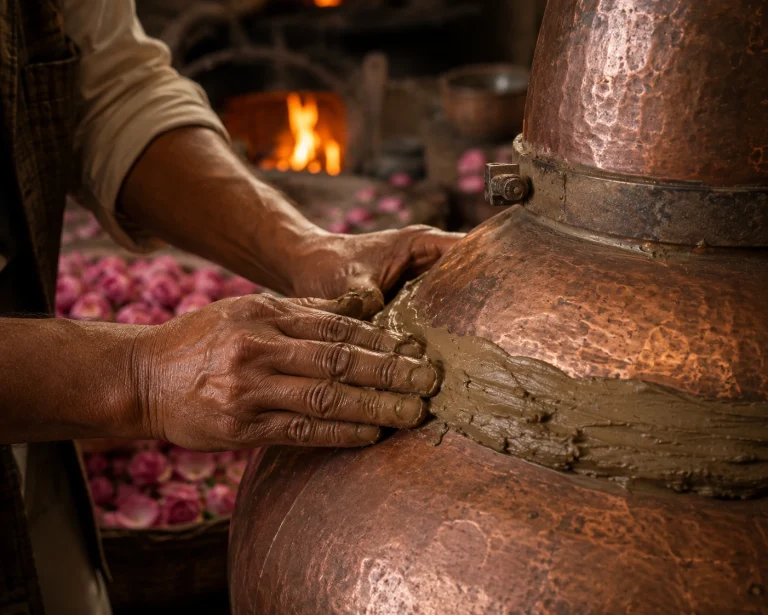
The old way of making perfume called deg-bhapka takes a lot of time and patience.To start, people put flowers, herbs or wood into a copper pot called a deg.
Then they add water. Heat the deg over a fire made from wood. This makes the steam rise. It takes the smell with it.
The steam goes through a pipe made of bamboo into another container called a bhapka that has oil in it. The oil is usually sandalwood oil.
After that the mixture cools down by itself. Then it is left alone for a few days or weeks. This is so the smell can get stronger and better.
The whole process of making deg-bhapka can take a day or several weeks. It depends on what’s used to make it. That is why real attar is a special and carefully made product.
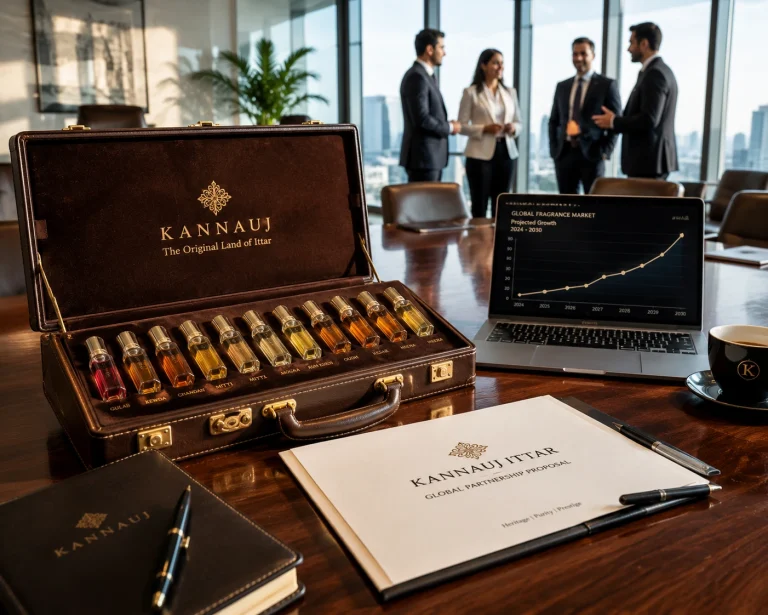
The Business Behind the Fragrance
The old way of making perfume called deg-bhapka takes a lot of time and patience.
To start, people put flowers, herbs or wood into a copper pot called a deg.
Then they add water. Heat the deg over a fire made from wood. This makes the steam rise. It takes the smell with it.
The steam goes through a pipe made of bamboo into another container called a bhapka that has oil in it. The oil is usually sandalwood oil.
After that the mixture cools down by itself. Then it is left alone for a few days or weeks. This is so the smell can get stronger and better.
The whole process of making deg-bhapka can take a days or several weeks. It depends on what’s used to make it. That is why real attar is a special and carefully made product.
Conclusion
Kannauj’s attar is more than a smell. It is a heritage built by many years of talent waiting and love. In a world that is moving more and more towards making things this little town shows that old ways, when taken care of properly can still be important and special. If you own a business like smells or just enjoy a good tale Kannaujs ittar is a very interesting part of Indias artistry that is worth learning about.
Leave a Reply